

”Pest” Control
If you’re a Christian or just want to learn about Christianity, c’mon and join us. Just to let you know what I usually do, I post a Bible chapter every day at any time between 5 and 11 A.M. U.S. central time, but we don’t have to stop there. We can make animations together, share Christian songs, parodies, comedy, sermons, and whatever else you want.
Now, just because I’m a little more light-hearted than some Christians doesn’t mean that this is all going to be fun and games. As a Christian, I have a responsibility to call out the things that God disapproves of. Some of the conversations we have might get a little hairy, and that’s okay, as long as we abide by the site’s community guidelines. 😊 You may ask, “If your goal is to draw people into God’s kingdom, why are you calling out things that He disapproves of? Wouldn’t that, for one, push people away from God and, for another, get you into fights that you don’t want to be in?” I will answer the first question with these verses:
James 5:20
“Pay attention to yourselves! If your brother sins, rebuke him, and if he repents, forgive him”
Titus 2:15
“Let him know that whoever brings back a sinner from his wandering will save his soul from death and will cover a multitude of sins”
1 Timothy 5:20
“As for those who persist in sin, rebuke them in the presence of all, so that the rest may stand in fear”
2 Timothy 4:2
“Preach the Word; be prepared in season and out of season; correct, rebuke and encourage–with great patience and careful instruction”
Psalm 141:5
“Let a righteous man strike me — it is a kindness; let him rebuke me — it is oil for my head; let my head not refuse it”
Proverbs 9:8
“Do not rebuke mockers or they will hate you; rebuke the wise and they will love you”.
And for the second question, Christianity is a sacrifice. I will take on challenges as a Christian that I wouldn’t as a lukewarm Christian, an atheist, a Buddhist, a Muslim, a Jew, etc. And when I encounter those challenges, I have to put my faith in Yahweh above my feelings and desires. I’m not supposed to store up treasures here on Earth, but in the heavenly kingdom. In order to do that, I have to be inconvenienced and mocked, and I’m fine with that. I’ve chosen to give up everything I want for my God.
If I post anything on here that has anything to do with my opinion or interpretation of a situation, 9 times out of 10, it’s because that is my interpretation of the Bible. I believe that that everything in the Bible is objectively true, there’s just debates on how to INTERPRET said truth. I try my hardest not to let my worldview effect my biblical view, though, it may seep through.
If you’re curious about the name, I had to think of something, so I came up with “Pest” Control (as atheists seem to think that the way we communicate our religion to them is annoying, so they could see us as pests, and we are all in one group so that we can contain the Christian stuff mostly inside the group for “control”).
Before I edited the description of this group, it said: “We can brainstorm to find out more ways to win atheists over to Christ.” Since I typed that, my beliefs have changed slightly. I believe that, yes it is great to have atheists have a change of heart, that’s one of our biggest goals is to have more people up in heaven, but we shouldn’t be intentionally TRYING to change their religion (both because it pushes people away from the religion, and it’s just not what any human needs to do to another human). We need to be ourselves around them, have them see how we are as a person, how Christianity (even if they can’t identify it as that) affects us, and if they want to, change. And we should never, ever, push them to change; the Bible even tells us this. I have made this mistake for years, and to all of the atheists and people with other religious beliefs that I have hurt by doing this, I’m so unbelievably sorry.
Thank you for your time. Have a blessed and wonderful day!
-

GHX$T<3 joined the group
 ”Pest” Control 3 years ago
 -
It so happened that Naomi had a relative by marriage, a man prominent and rich, connected with Elimelech’s family. His name was Boaz. One day Ruth, the Moabite foreigner, said to Naomi, “I’m going to work; I’m going out to glean among the sheaves, following after some harvester who will treat me kindly.” Naomi said, “Go ahead, dear daughter.” And so she set out. She went and started gleaning in a field, following in the wake of the harvesters. Eventually she ended up in the part of the field owned by Boaz, her father-in-law Elimelech’s relative. A little later Boaz came out from Bethlehem, greeting his harvesters, “God be with you!” They replied, “And God bless you!” Boaz asked his young servant who was foreman over the farm hands, “Who is this young woman? Where did she come from?” The foreman said, “Why, that’s the Moabite girl, the one who came with Naomi from the country of Moab. She asked permission. ‘Let me glean,’ she said, ‘and gather among the sheaves following after your harvesters.’ She’s been at it steady ever since, from early morning until now, without so much as a break.” Then Boaz spoke to Ruth: “Listen, my daughter. From now on don’t go to any other field to glean—stay right here in this one. And stay close to my young women. Watch where they are harvesting and follow them. And don’t worry about a thing; I’ve given orders to my servants not to harass you. When you get thirsty, feel free to go and drink from the water buckets that the servants have filled.” She dropped to her knees, then bowed her face to the ground. “How does this happen that you should pick me out and treat me so kindly—me, a foreigner?” Boaz answered her, “I’ve heard all about you—heard about the way you treated your mother-in-law after the death of her husband, and how you left your father and mother and the land of your birth and have come to live among a bunch of total strangers. God reward you well for what you’ve done—and with a generous bonus besides from God, to whom you’ve come seeking protection under his wings.” She said, “Oh sir, such grace, such kindness—I don’t deserve it. You’ve touched my heart, treated me like one of your own. And I don’t even belong here!” At the lunch break, Boaz said to her, “Come over here; eat some bread. Dip it in the wine.” So she joined the harvesters. Boaz passed the roasted grain to her. She ate her fill and even had some left over. When she got up to go back to work, Boaz ordered his servants: “Let her glean where there’s still plenty of grain on the ground—make it easy for her. Better yet, pull some of the good stuff out and leave it for her to glean. Give her special treatment.” Ruth gleaned in the field until evening. When she threshed out what she had gathered, she ended up with nearly a full sack of barley! She gathered up her gleanings, went back to town, and showed her mother-in-law the results of her day’s work; she also gave her the leftovers from her lunch. Naomi asked her, “So where did you glean today? Whose field? God bless whoever it was who took such good care of you!” Ruth told her mother-in-law, “The man with whom I worked today? His name is Boaz.” Naomi said to her daughter-in-law, “Why, God bless that man! God hasn’t quite walked out on us after all! He still loves us, in bad times as well as good!” Naomi went on, “That man, Ruth, is one of our circle of covenant redeemers, a close relative of ours!” Ruth the Moabitess said, “Well, listen to this: He also told me, ‘Stick with my workers until my harvesting is finished.’” Naomi said to Ruth, “That’s wonderful, dear daughter! Do that! You’ll be safe in the company of his young women; no danger now of being raped in some stranger’s field.” So Ruth did it—she stuck close to Boaz’s young women, gleaning in the fields daily until both the barley and wheat harvesting were finished. And she continued living with her mother-in-law. * * *
Ruth 2:1-23 MSG
https://bible.com/bible/97/rut.2.1-23.MSG -
Now, we’re starting in Ruth.
Once upon a time—it was back in the days when judges led Israel—there was a famine in the land. A man from Bethlehem in Judah left home to live in the country of Moab, he and his wife and his two sons. The man’s name was Elimelech; his wife’s name was Naomi; his sons were named Mahlon and Kilion—all Ephrathites from Bethlehem in Judah. They all went to the country of Moab and settled there. Elimelech died and Naomi was left, she and her two sons. The sons took Moabite wives; the name of the first was Orpah, the second Ruth. They lived there in Moab for the next ten years. But then the two brothers, Mahlon and Kilion, died. Now the woman was left without either her young men or her husband. * * * One day she got herself together, she and her two daughters-in-law, to leave the country of Moab and set out for home; she had heard that God had been pleased to visit his people and give them food. And so she started out from the place she had been living, she and her two daughters-in-law with her, on the road back to the land of Judah. After a short while on the road, Naomi told her two daughters-in-law, “Go back. Go home and live with your mothers. And may God treat you as graciously as you treated your deceased husbands and me. May God give each of you a new home and a new husband!” She kissed them and they cried openly. They said, “No, we’re going on with you to your people.” But Naomi was firm: “Go back, my dear daughters. Why would you come with me? Do you suppose I still have sons in my womb who can become your future husbands? Go back, dear daughters—on your way, please! I’m too old to get a husband. Why, even if I said, ‘There’s still hope!’ and this very night got a man and had sons, can you imagine being satisfied to wait until they were grown? Would you wait that long to get married again? No, dear daughters; this is a bitter pill for me to swallow—more bitter for me than for you. God has dealt me a hard blow.” Again they cried openly. Orpah kissed her mother-in-law good-bye; but Ruth embraced her and held on. Naomi said, “Look, your sister-in-law is going back home to live with her own people and gods; go with her.” But Ruth said, “Don’t force me to leave you; don’t make me go home. Where you go, I go; and where you live, I’ll live. Your people are my people, your God is my god; where you die, I’ll die, and that’s where I’ll be buried, so help me God—not even death itself is going to come between us!” When Naomi saw that Ruth had her heart set on going with her, she gave in. And so the two of them traveled on together to Bethlehem. When they arrived in Bethlehem the whole town was soon buzzing: “Is this really our Naomi? And after all this time!” But she said, “Don’t call me Naomi; call me Bitter. The Strong One has dealt me a bitter blow. I left here full of life, and God has brought me back with nothing but the clothes on my back. Why would you call me Naomi? God certainly doesn’t. The Strong One ruined me.” And so Naomi was back, and Ruth the foreigner with her, back from the country of Moab. They arrived in Bethlehem at the beginning of the barley harvest.
Ruth 1:1-22 MSG
https://bible.com/bible/97/rut.1.1-22.MSG -
This is the end of Judges. We’ll start on Ruth in a second.
Back at Mizpah the men of Israel had taken an oath: “No man among us will give his daughter to a Benjaminite in marriage.” Now, back in Bethel, the people sat in the presence of God until evening. They cried loudly; there was widespread lamentation. They said, “Why, O God, God of Israel, has this happened? Why do we find ourselves today missing one whole tribe from Israel?” Early the next morning, the people got busy and built an altar. They sacrificed Whole-Burnt-Offerings and Peace-Offerings. Then the Israelites said, “Who from all the tribes of Israel didn’t show up as we gathered in the presence of God?” For they had all taken a sacred oath that anyone who had not gathered in the presence of God at Mizpah had to be put to death. * * * But the People of Israel were feeling sorry for Benjamin, their brothers. They said, “Today, one tribe is cut off from Israel. How can we get wives for those who are left? We have sworn by God not to give any of our daughters to them in marriage.” They said, “Which one of the tribes of Israel didn’t gather before God at Mizpah?” It turned out that no one had come to the gathering from Jabesh Gilead. When they took a roll call of the people, not a single person from Jabesh Gilead was there. So the congregation sent twelve divisions of their top men there with the command, “Kill everyone of Jabesh Gilead, including women and children. These are your instructions: Every man and woman who has had sexual intercourse you must kill. But keep the virgins alive.” And that’s what they did. And they found four hundred virgins among those who lived in Jabesh Gilead; they had never had sexual intercourse with a man. And they brought them to the camp at Shiloh, which is in the land of Canaan. Then the congregation sent word to the Benjaminites who were at the Rimmon Rock and offered them peace. And Benjamin came. They gave them the women they had let live at Jabesh Gilead. But even then, there weren’t enough for all the men. The people felt bad for Benjamin; God had left out Benjamin—the missing piece from the Israelite tribes. * * * The elders of the congregation said, “How can we get wives for the rest of the men, since all the Benjaminite women have been killed? How can we keep the inheritance alive for the Benjaminite survivors? How can we prevent an entire tribe from extinction? We certainly can’t give our own daughters to them as wives.” (Remember, the Israelites had taken the oath: “Cursed is anyone who provides a wife to Benjamin.”) Then they said, “There is that festival of God held every year in Shiloh. It’s north of Bethel, just east of the main road that goes up from Bethel to Shechem and a little south of Lebonah.” So they told the Benjaminites, “Go and hide in the vineyards. Stay alert—when you see the Shiloh girls come out to dance the dances, run out of the vineyards, grab one of the Shiloh girls for your wife, and then hightail it back to the country of Benjamin. When their fathers or brothers come to lay charges against us, we’ll tell them, ‘We did them a favor. After all we didn’t go to war and kill to get wives for men. And it wasn’t as if you were in on it by giving consent. But if you keep this up, you will incur blame.’” And that’s what the Benjaminites did: They carried off girls from the dance, wives enough for their number, got away, and went home to their inheritance. They rebuilt their towns and settled down. From there the People of Israel dispersed, each man heading back to his own tribe and clan, each to his own plot of land. At that time there was no king in Israel. People did whatever they felt like doing.
Judges 21:1-25 MSG
https://bible.com/bible/97/jdg.21.1-25.MSG -
Wow! I didn’t realize that I missed a day entirely, sorry guys!
-

We will never forgive you
Now you shall be crucified
2023-05-29 13:46:17 UTC
-
It was an era when there was no king in Israel. A Levite, living as a stranger in the backwoods hill country of Ephraim, got himself a concubine, a woman from Bethlehem in Judah. But she quarreled with him and left, returning to her father’s house in Bethlehem in Judah. She was there four months. Then her husband decided to go after her and try to win her back. He had a servant and a pair of donkeys with him. When he arrived at her father’s house, the girl’s father saw him, welcomed him, and made him feel at home. His father-in-law, the girl’s father, pressed him to stay. He stayed with him three days; they feasted and drank and slept. On the fourth day, they got up at the crack of dawn and got ready to go. But the girl’s father said to his son-in-law, “Strengthen yourself with a hearty breakfast and then you can go.” So they sat down and ate breakfast together. The girl’s father said to the man, “Come now, be my guest. Stay the night—make it a holiday.” The man got up to go, but his father-in-law kept after him, so he ended up spending another night. On the fifth day, he was again up early, ready to go. The girl’s father said, “You need some breakfast.” They went back and forth, and the day slipped on as they ate and drank together. But the man and his concubine were finally ready to go. Then his father-in-law, the girl’s father, said, “Look, the day’s almost gone—why not stay the night? There’s very little daylight left; stay another night and enjoy yourself. Tomorrow you can get an early start and set off for your own place.” But this time the man wasn’t willing to spend another night. He got things ready, left, and went as far as Jebus (Jerusalem) with his pair of saddled donkeys, his concubine, and his servant. At Jebus, though, the day was nearly gone. The servant said to his master, “It’s late; let’s go into this Jebusite city and spend the night.” But his master said, “We’re not going into any city of foreigners. We’ll go on to Gibeah.” He directed his servant, “Keep going. Let’s go on ahead. We’ll spend the night either at Gibeah or Ramah.” So they kept going. As they pressed on, the sun finally left them in the vicinity of Gibeah, which belongs to Benjamin. They left the road there to spend the night at Gibeah. The Levite went and sat down in the town square, but no one invited them in to spend the night. Then, late in the evening, an old man came in from his day’s work in the fields. He was from the hill country of Ephraim and lived temporarily in Gibeah where all the local citizens were Benjaminites. When the old man looked up and saw the traveler in the town square, he said, “Where are you going? And where are you from?” The Levite said, “We’re just passing through. We’re coming from Bethlehem on our way to a remote spot in the hills of Ephraim. I come from there. I’ve just made a trip to Bethlehem in Judah and I’m on my way back home, but no one has invited us in for the night. We wouldn’t be any trouble: We have food and straw for the donkeys, and bread and wine for the woman, the young man, and me—we don’t need anything.” The old man said, “It’s going to be all right; I’ll take care of you. You aren’t going to spend the night in the town square.” He took them home and fed the donkeys. They washed up and sat down to a good meal. They were relaxed and enjoying themselves when the men of the city, a gang of local hell-raisers all, surrounded the house and started pounding on the door. They yelled for the owner of the house, the old man, “Bring out the man who came to your house. We want to have sex with him.” He went out and told them, “No, brothers! Don’t be obscene—this man is my guest. Don’t commit this outrage. Look, my virgin daughter and his concubine are here. I’ll bring them out for you. Abuse them if you must, but don’t do anything so senselessly vile to this man.” But the men wouldn’t listen to him. Finally, the Levite pushed his concubine out the door to them. They raped her repeatedly all night long. Just before dawn they let her go. The woman came back and fell at the door of the house where her master was sleeping. When the sun rose, there she was. It was morning. Her master got up and opened the door to continue his journey. There she was, his concubine, crumpled in a heap at the door, her hands on the threshold. “Get up,” he said. “Let’s get going.” There was no answer. He lifted her onto his donkey and set out for home. When he got home he took a knife and dismembered his concubine—cut her into twelve pieces. He sent her, piece by piece, throughout the country of Israel. And he ordered the men he sent out, “Say to every man in Israel: ‘Has such a thing as this ever happened from the time the Israelites came up from the land of Egypt until now? Think about it! Talk it over. Do something!’” * * *
Judges 19:1-6, 6-15, 15-30 MSG
https://bible.com/bible/97/jdg.19.1-30.MSG-

Damn he chopped up his wife just because she was with another man
2023-05-27 14:31:39 UTC-
 Replying to:
From what I understand, he did this so that he could show Israel the proof of how bad and immoral things had gotten. Though, this is UNBELIEVABLY difficult for me to wrap my mind around, so I could be wrong.
2023-05-27 14:56:00 UTC-
 Replying to:
No you are right. It was also a pleading for the people to try to do good.
2023-05-27 17:02:45 UTC
-
What a pleasant and uplifting bible excerpt
2023-05-27 14:41:53 UTC-
Replying to:
Yeah, the Bible is NOT just sunshine and rainbows like everyone portrays it to be. If it were, I probably wouldn’t believe it to be as true as I do. Even the “good” guys aren’t so “good”.
2023-05-27 15:01:05 UTC-
Replying to:
I agree
2023-05-27 16:05:28 UTC
-
This is oddly similar to the passages in Genesis that talk about Sodom and Gomorrah. In both cases, the man of the house takes someone on the street into his home to protect them from harm, once the people who were on the street are inside and safe, the house is surrounded by people (most, if not, all of them men) who want sexually assault the men who were brought into the house, and the man of the house offers a woman/women to the people outside in exchange for their intended targets (which, in both cases, is a very wrong thing to do, and I’m not entirely sure why it would even be a thought).
2023-05-27 14:48:00 UTC -

huh
2023-05-27 15:13:18 UTC-
Replying to:
huh
2023-05-27 16:05:43 UTC
-
Last chapter was short. I’ll post another one.
In those days there was no king in Israel. But also in those days, the tribe of Dan was looking for a place to settle down. They hadn’t yet occupied their plot among the tribes of Israel. The Danites sent out five robust warriors from Zorah and Eshtaol to look over the land and see what was out there suitable for their families. They said, “Go and explore the land.” They went into the hill country of Ephraim and got as far as the house of Micah. They camped there for the night. As they neared Micah’s house, they recognized the voice of the young Levite. They went over and said to him, “How on earth did you get here? What’s going on? What are you doing here?” He said, “One thing led to another: Micah hired me and I’m now his priest.” They said, “Oh, good—inquire of God for us. Find out whether our mission will be a success.” The priest said, “Go assured. God’s looking out for you all the way.” The five men left and headed north to Laish. They saw that the people there were living in safety under the umbrella of the Sidonians, quiet and unsuspecting. They had everything going for them. But the people lived a long way from the Sidonians to the west and had no treaty with the Arameans to the east. When they got back to Zorah and Eshtaol, their brothers asked, “So, how did you find things?” They said, “Let’s go for it! Let’s attack. We’ve seen the land and it is excellent. Are you going to just sit on your hands? Don’t dawdle! Invade and conquer! When you get there, you’ll find they’re sitting ducks, totally unsuspecting. Wide open land—God is handing it over to you, everything you could ever ask for.” So six hundred Danite men set out from Zorah and Eshtaol, armed to the teeth. Along the way they made camp at Kiriath Jearim in Judah. That is why the place is still today called Dan’s Camp—it’s just west of Kiriath Jearim. From there they proceeded into the hill country of Ephraim and came to Micah’s house. The five men who earlier had explored the country of Laish told their companions, “Did you know there’s an ephod, teraphim-idols, and a cast god-sculpture in these buildings? What do you think? Do you want to do something about it?” So they turned off the road there, went to the house of the young Levite at Micah’s place and asked how things had been with him. The six hundred Danites, all well-armed, stood guard at the entrance to the gate while the five scouts who had gone to explore the land went in and took the carved idol, the ephod, the teraphim-idols, and the god-sculpture. The priest was standing at the gate entrance with the six hundred armed men. When the five went into Micah’s house and took the carved idol, the ephod, the teraphim-idols, and the sculpted god, the priest said to them, “What do you think you’re doing?” They said to him, “Hush! Don’t make a sound. Come with us. Be our father and priest. Which is more important, that you be a priest to one man or that you become priest to a whole tribe and clan in Israel?” The priest jumped at the chance. He took the ephod, the teraphim-idols, and the idol and fell in with the troops. They turned away and set out, putting the children, the cattle, and the gear in the lead. They were well on their way from Micah’s house before Micah and his neighbors got organized. But they soon overtook the Danites. They shouted at them. The Danites turned around and said, “So what’s all the noise about?” Micah said, “You took my god, the one I made, and you took my priest. And you marched off! What do I have left? How can you now say, ‘What’s the matter?’” But the Danites answered, “Don’t yell at us; you just might provoke some fierce, hot-tempered men to attack you, and you’ll end up an army of dead men.” The Danites went on their way. Micah saw that he didn’t stand a chance against their arms. He turned back and went home. So they took the things that Micah had made, along with his priest, and they arrived at Laish, that city of quiet and unsuspecting people. They massacred the people and burned down the city. There was no one around to help. They were a long way from Sidon and had no treaty with the Arameans. Laish was in the valley of Beth Rehob. When they rebuilt the city they renamed it Dan after their ancestor who was a son of Israel, but its original name was Laish. The Danites set up the god-figure for themselves. Jonathan son of Gershom, the son of Moses, and his descendants were priests to the tribe of Dan down to the time of the land’s captivity. All during the time that there was a sanctuary of God in Shiloh, they kept for their private use the god-figure that Micah had made.
Judges 18:1-31 MSG
https://bible.com/bible/97/jdg.18.1-31.MSG -
There was a man from the hill country of Ephraim named Micah. He said to his mother, “Remember that 1,100 pieces of silver that were taken from you? I overheard you when you pronounced your curse. Well, I have the money; I stole it. But now I’ve brought it back to you.” His mother said, “God bless you, my son!” As he returned the 1,100 silver pieces to his mother, she said, “I had totally consecrated this money to God for my son to make a statue, a cast god.” Then she took 200 pieces of the silver and gave it to a sculptor and he cast them into the form of a god. This man, Micah, had a private chapel. He had made an ephod and some teraphim-idols and had ordained one of his sons to be his priest. In those days there was no king in Israel. People did whatever they felt like doing. * * * Meanwhile there was a young man from Bethlehem in Judah and from a family of Judah. He was a Levite but was a stranger there. He left that town, Bethlehem in Judah, seeking his fortune. He got as far as the hill country of Ephraim and showed up at Micah’s house. Micah asked him, “So where are you from?” He said, “I’m a Levite from Bethlehem in Judah. I’m on the road, looking for a place to settle down.” Micah said, “Stay here with me. Be my father and priest. I’ll pay you ten pieces of silver a year, whatever clothes you need, and your meals.” The Levite agreed and moved in with Micah. The young man fit right in and became one of the family. Micah appointed the young Levite as his priest. This all took place in Micah’s home. Micah said, “Now I know that God will make things go well for me—why, I’ve got a Levite for a priest!” * * *
Judges 17:1-13 MSG
https://bible.com/bible/97/jdg.17.1-13.MSG -
Samson went to Gaza and saw a prostitute. He went to her. The news got around: “Samson’s here.” They gathered around in hiding, waiting all night for him at the city gate, quiet as mice, thinking, “At sunrise we’ll kill him.” Samson was in bed with the woman until midnight. Then he got up, seized the doors of the city gate and the two gateposts, bolts and all, hefted them on his shoulder, and carried them to the top of the hill that faces Hebron. * * * Some time later he fell in love with a woman in the Valley of Sorek (Grapes). Her name was Delilah. The Philistine tyrants approached her and said, “Seduce him. Discover what’s behind his great strength and how we can tie him up and humble him. Each man’s company will give you a hundred shekels of silver.” So Delilah said to Samson, “Tell me, dear, the secret of your great strength, and how you can be tied up and humbled.” Samson told her, “If they were to tie me up with seven bowstrings—the kind made from fresh animal tendons, not dried out—then I would become weak, just like anyone else.” The Philistine tyrants brought her seven bowstrings, not dried out, and she tied him up with them. The men were waiting in ambush in her room. Then she said, “The Philistines are on you, Samson!” He snapped the cords as though they were mere threads. The secret of his strength was still a secret. Delilah said, “Come now, Samson—you’re playing with me, making up stories. Be serious; tell me how you can be tied up.” He told her, “If you were to tie me up tight with new ropes, ropes never used for work, then I would be helpless, just like anybody else.” So Delilah got some new ropes and tied him up. She said, “The Philistines are on you, Samson!” The men were hidden in the next room. He snapped the ropes from his arms like threads. Delilah said to Samson, “You’re still playing games with me, teasing me with lies. Tell me how you can be tied up.” He said to her, “If you wove the seven braids of my hair into the fabric on the loom and drew it tight, then I would be as helpless as any other mortal.” When she had him fast asleep, Delilah took the seven braids of his hair and wove them into the fabric on the loom and drew it tight. Then she said, “The Philistines are on you, Samson!” He woke from his sleep and ripped loose from both the loom and fabric! She said, “How can you say ‘I love you’ when you won’t even trust me? Three times now you’ve toyed with me, like a cat with a mouse, refusing to tell me the secret of your great strength.” She kept at it day after day, nagging and tormenting him. Finally, he was fed up—he couldn’t take another minute of it. He spilled it. He told her, “A razor has never touched my head. I’ve been God’s Nazirite from conception. If I were shaved, my strength would leave me; I would be as helpless as any other mortal.” When Delilah realized that he had told her his secret, she sent for the Philistine tyrants, telling them, “Come quickly—this time he’s told me the truth.” They came, bringing the bribe money. When she got him to sleep, his head on her lap, she motioned to a man to cut off the seven braids of his hair. Immediately he began to grow weak. His strength drained from him. Then she said, “The Philistines are on you, Samson!” He woke up, thinking, “I’ll go out, like always, and shake free.” He didn’t realize that God had abandoned him. The Philistines grabbed him, gouged out his eyes, and took him down to Gaza. They shackled him in irons and put him to the work of grinding in the prison. But his hair, though cut off, began to grow again. The Philistine tyrants got together to offer a great sacrifice to their god Dagon. They celebrated, saying, Our god has given us Samson our enemy! And when the people saw him, they joined in, cheering their god, Our god has given Our enemy to us, The one who ravaged our country, Piling high the corpses among us. Then this: Everyone was feeling high and someone said, “Get Samson! Let him show us his stuff!” They got Samson from the prison and he put on a show for them. They had him standing between the pillars. Samson said to the young man who was acting as his guide, “Put me where I can touch the pillars that hold up the temple so I can rest against them.” The building was packed with men and women, including all the Philistine tyrants. And there were at least three thousand in the stands watching Samson’s performance. And Samson cried out to God: Master, God! Oh, please, look on me again, Oh, please, give strength yet once more. God! With one avenging blow let me be avenged On the Philistines for my two eyes! Then Samson reached out to the two central pillars that held up the building and pushed against them, one with his right arm, the other with his left. Saying, “Let me die with the Philistines,” Samson pushed hard with all his might. The building crashed on the tyrants and all the people in it. He killed more people in his death than he had killed in his life. * * * His brothers and all his rel…[Read more]
-
Later on—it was during the wheat harvest—Samson visited his bride, bringing a young goat. He said, “Let me see my wife—show me her bedroom.” But her father wouldn’t let him in. He said, “I concluded that by now you hated her with a passion, so I gave her to your best man. But her little sister is even more beautiful. Why not take her instead?” Samson said, “That does it. This time when I wreak havoc on the Philistines, I’m blameless.” Samson then went out and caught three hundred jackals. He lashed the jackals’ tails together in pairs and tied a torch between each pair of tails. He then set fire to the torches and let them loose in the Philistine fields of ripe grain. Everything burned, both stacked and standing grain, vineyards and olive orchards—everything. The Philistines said, “Who did this?” They were told, “Samson, son-in-law of the Timnite who took his bride and gave her to his best man.” The Philistines went up and burned both her and her father to death. Samson then said, “If this is the way you’re going to act, I swear I’ll get even with you. And I’m not quitting till the job’s done!” With that he tore into them, ripping them limb from limb—a huge slaughter. Then he went down and stayed in a cave at Etam Rock. * * * The Philistines set out and made camp in Judah, preparing to attack Lehi (Jawbone). When the men of Judah asked, “Why have you come up against us?” they said, “We’re out to get Samson. We’re going after Samson to do to him what he did to us.” Three companies of men from Judah went down to the cave at Etam Rock and said to Samson, “Don’t you realize that the Philistines already bully and Lord it over us? So what’s going on with you, making things even worse?” He said, “It was tit for tat. I only did to them what they did to me.” They said, “Well, we’ve come down here to tie you up and turn you over to the Philistines.” Samson said, “Just promise not to hurt me.” “We promise,” they said. “We will tie you up and surrender you to them but, believe us, we won’t kill you.” They proceeded to tie him with new ropes and led him up from the Rock. As he approached Lehi, the Philistines came to meet him, shouting in triumph. And then the Spirit of God came on him with great power. The ropes on his arms fell apart like flax on fire; the strips of leather slipped off his hands. He spotted a fresh donkey jawbone, reached down and grabbed it, and with it killed the whole company. And Samson said, With a donkey’s jawbone I made heaps of donkeys of them. With a donkey’s jawbone I killed an entire company. When he finished speaking, he threw away the jawbone. He named that place Ramath Lehi (Jawbone Hill). Now he was suddenly very thirsty. He called out to God, “You have given your servant this great victory. Are you going to abandon me to die of thirst and fall into the hands of the uncircumcised?” So God split open the rock basin in Lehi; water gushed out and Samson drank. His spirit revived—he was alive again! That’s why it’s called En Hakkore (Caller’s Spring). It’s still there at Lehi today.
Judges 15:1-19 MSG
https://bible.com/bible/97/jdg.15.1-19.MSG -
Gonna post a verse I had to read for church last sunday;
Matthew 25:23
His lord said unto him, Well done, good and faithful servant; thou hast been faithful over a few things, I will make thee ruler over many things: enter thou into the joy of thy lord.
The Church’s theme last Sunday was faithfulness, so it makes sense and it was also pastor appreciation too.
-
That’s awesome! Thank you for sharing!
2023-05-24 13:06:49 UTC
-

Swift joined the group
”Pest” Control 3 years ago-
Hey, thank you for joining the group!
-
-
Samson went down to Timnah. There in Timnah a woman caught his eye, a Philistine girl. He came back and told his father and mother, “I saw a woman in Timnah, a Philistine girl; get her for me as my wife.” His parents said to him, “Isn’t there a woman among the girls in the neighborhood of our people? Do you have to go get a wife from the uncircumcised Philistines?” But Samson said to his father, “Get her for me. She’s the one I want—she’s the right one.” (His father and mother had no idea that God was behind this, that he was arranging an opportunity against the Philistines. At the time the Philistines Lorded it over Israel.) Samson went down to Timnah with his father and mother. When he got to the vineyards of Timnah, a young lion came at him, roaring. The Spirit of God came on him powerfully and he ripped it open barehanded, like tearing a young goat. But he didn’t tell his parents what he had done. Then he went on down and spoke to the woman. In Samson’s eyes, she was the one. Some days later when he came back to get her, he made a little detour to look at what was left of the lion. And there a wonder: a swarm of bees in the lion’s carcass—and honey! He scooped it up in his hands and kept going, eating as he went. He rejoined his father and mother and gave some to them and they ate. But he didn’t tell them that he had scooped out the honey from the lion’s carcass. His father went on down to make arrangements with the woman, while Samson prepared a feast there. That’s what the young men did in those days. Because the people were wary of him, they arranged for thirty friends to mingle with him. Samson said to them: “Let me put a riddle to you. If you can figure it out during the seven days of the feast, I’ll give you thirty linen garments and thirty changes of fine clothing. But if you can’t figure it out then you’ll give me thirty linen garments and thirty changes of fine clothing.” They said, “Put your riddle. Let’s hear it.” So he said, From the eater came something to eat, From the strong came something sweet. They couldn’t figure it out. After three days they were still stumped. On the fourth day they said to Samson’s bride, “Worm the answer out of your husband or we’ll burn you and your father’s household. Have you invited us here to bankrupt us?” So Samson’s bride turned on the tears, saying to him, “You hate me. You don’t love me. You’ve told a riddle to my people but you won’t even tell me the answer.” He said, “I haven’t told my own parents—why would I tell you?” But she turned on the tears all the seven days of the feast. On the seventh day, worn out by her nagging, he told her. Then she went and told it to her people. The men of the town came to him on the seventh day, just before sunset and said, What is sweeter than honey? What is stronger than a lion? And Samson said, If you hadn’t plowed with my heifer, You wouldn’t have found out my riddle. Then the Spirit of God came powerfully on him. He went down to Ashkelon and killed thirty of their men, stripped them, and gave their clothing to those who had solved the riddle. Stalking out, smoking with anger, he went home to his father’s house. Samson’s bride became the wife of the best man at his wedding. * * *
Judges 14:1-13, 13-14, 14-20 MSG
https://bible.com/bible/97/jdg.14.1-20.MSG -
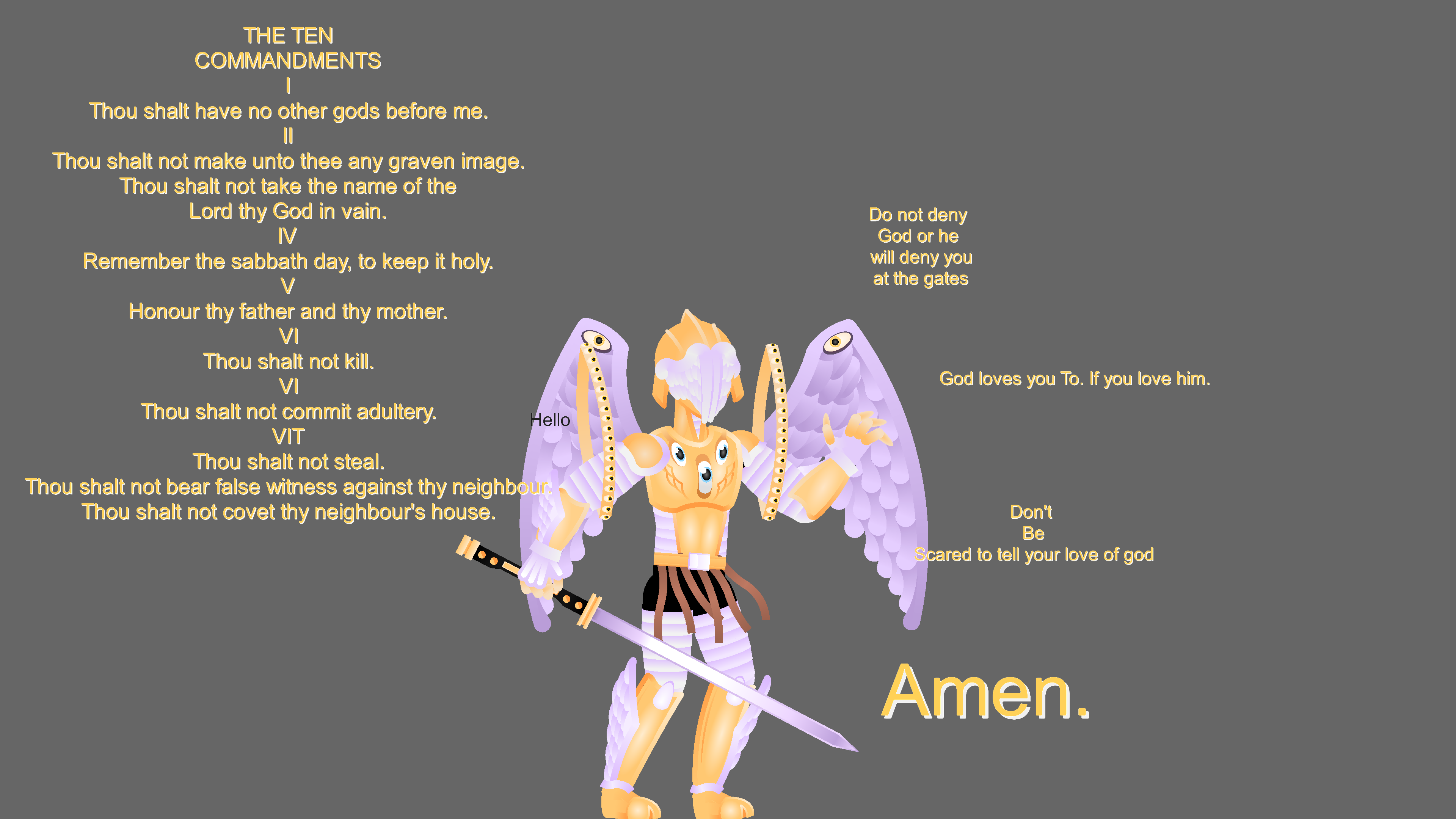
God is great. God is amazing. God is thy Lord. Amen. Also bible quote because god Is the best. “ Trust in the Lord with all your heart, and do not lean on your understanding. In all your ways acknowledge him, and he will make straight your paths”
-

 Is now their 2023-05-23 05:02:03 UTC
 -

Again with the penis feet
2023-05-23 11:47:54 UTC-
Replying to:
Even with how warped my mind is, it’s very difficult for me to see penis feet, and where I could potentially see it, it’s quite a stretch to say that it looks like a peen
2023-05-23 12:42:15 UTC
-
This is one of my favorite posts on here. Thank you!
2023-05-23 12:38:45 UTC-
Replying to:
Hi. No problem happy to be a part of this group.
2023-05-23 15:03:12 UTC
-
And then the People of Israel were back at it again, doing what was evil in God’s sight. God put them under the domination of the Philistines for forty years. At that time there was a man named Manoah from Zorah from the tribe of Dan. His wife was barren and childless. The angel of God appeared to her and told her, “I know that you are barren and childless, but you’re going to become pregnant and bear a son. But take much care: Drink no wine or beer; eat nothing ritually unclean. You are, in fact, pregnant right now, carrying a son. No razor will touch his head—the boy will be God’s Nazirite from the moment of his birth. He will launch the deliverance from Philistine oppression.” The woman went to her husband and said, “A man of God came to me. He looked like the angel of God—terror laced with glory! I didn’t ask him where he was from and he didn’t tell me his name, but he told me, ‘You’re pregnant. You’re going to give birth to a son. Don’t drink any wine or beer and eat nothing ritually unclean. The boy will be God’s Nazirite from the moment of birth to the day of his death.’” Manoah prayed to God: “Master, let the man of God you sent come to us again and teach us how to raise this boy who is to be born.” God listened to Manoah. God’s angel came again to the woman. She was sitting in the field; her husband Manoah wasn’t there with her. She jumped to her feet and ran and told her husband: “He’s back! The man who came to me that day!” Manoah got up and, following his wife, came to the man. He said to him, “Are you the man who spoke to my wife?” He said, “I am.” Manoah said, “So. When what you say comes true, what do you have to tell us about this boy and his work?” The angel of God said to Manoah, “Keep in mind everything I told the woman. Eat nothing that comes from the vine: Drink no wine or beer; eat no ritually unclean foods. She’s to observe everything I commanded her.” Manoah said to the angel of God, “Please, stay with us a little longer; we’ll prepare a meal for you—a young goat.” God’s angel said to Manoah, “Even if I stay, I won’t eat your food. But if you want to prepare a Whole-Burnt-Offering for God, go ahead—offer it!” Manoah had no idea that he was talking to the angel of God. Then Manoah asked the angel of God, “What’s your name? When your words come true, we’d like to honor you.” The angel of God said, “What’s this? You ask for my name? You wouldn’t understand—it’s sheer wonder.” So Manoah took the kid and the Grain-Offering and sacrificed them on a rock altar to God who works wonders. As the flames leapt up from the altar to heaven, God’s angel also ascended in the altar flames. When Manoah and his wife saw this, they fell facedown to the ground. Manoah and his wife never saw the angel of God again. Only then did Manoah realize that this was God’s angel. He said to his wife, “We’re as good as dead! We’ve looked on God!” But his wife said, “If God were planning to kill us, he wouldn’t have accepted our Whole-Burnt-Offering and Grain-Offering, or revealed all these things to us—given us this birth announcement.” The woman gave birth to a son. They named him Samson. The boy grew and God blessed him. The Spirit of God began working in him while he was staying at a Danite camp between Zorah and Eshtaol. * * *
Judges 13:1-21, 21-25 MSG
https://bible.com/bible/97/jdg.13.1-25.MSG-
“The angel of God said, “What’s this? You ask for my name? You wouldn’t understand—it’s sheer wonder.”” Other translations of the Bible say things like “wonderful”, “miraculous”, “a secret”, etc. I personally don’t think this translation of it is the most accurate, but it gets the point across.
2023-05-22 13:21:05 UTC -

This is an animation website
2023-05-22 13:23:40 UTC-
 Replying to:
It’s Sticknodes, we can use a little Jesus here
2023-05-22 13:31:18 UTC -
 Replying to:
He’s free to post anything as long as it’s in line with the rules
Ralph has allowed it so far so , and the community so far accepts H00ps with open arms 🤷♂️
____
Plus , not trying to be that guy but you haven’t posted much in terms of sn-related content , no need to have sudden double standards my guy2023-05-22 13:41:25 UTC-
 Replying to:
P l u s h
2023-05-22 13:48:50 UTC-
Replying to:
 2023-05-22 13:50:33 UTC
-
Replying to:
90% of posts here are shitposts. Can’t have a problem with this, without having one with those.
2023-05-22 13:43:29 UTC
- Load More


Hey, thank you for joining the group!
Ya. I never really new what it was about. So when I went to go look over it I was surprised and impressed on what the groups center goal was. I love it by the way. Also thank you for greeting me into your group.
Absolutely! And thank you!