

@jumpsh00ps

Joined on July 4th, 2017, this user has been a member for 3,258 days and is the 39th person to register an account.
Has 13 submissions, the first one uploaded on May 7th, 2017 and the most recent on November 7th, 2017.
Of those, 0 have been featured and 0 have won Users' Choice.
On average, each submission earns 1,473 downloads.
In total, they have been download 19,156 times.
Counting every individual stickfigure, including the contents of all packs, this user has technically made and submitted 20 stickfigures.
On average, when this user rates stickfigures, they are 99% positive.
Has made 499 comments on non-activity pages of the site. Alternatively, this user has made 3,412 comments on actual activity pages of the site.
This member is not a Users' Choice voter.
Show More


-
Matthew 12:1-50 MSG
[1-2] One Sabbath, Jesus was strolling with his disciples through a field of ripe grain. Hungry, the disciples were pulling off the heads of grain and munching on them. Some Pharisees reported them to Jesus: “Your disciples are breaking the Sabbath rules!” [3-5] Jesus said, “Really? Didn’t you ever read what David and his companions did when they were hungry, how they entered the sanctuary and ate fresh bread off the altar, bread that no one but priests were allowed to eat? And didn’t you ever read in God’s Law that priests carrying out their Temple duties break Sabbath rules all the time and it’s not held against them? [6-8] “There is far more at stake here than religion. If you had any idea what this Scripture meant—‘I prefer a flexible heart to an inflexible ritual’—you wouldn’t be nitpicking like this. The Son of Man is no yes-man to the Sabbath; he’s in charge.” [9-10] When Jesus left the field, he entered their meeting place. There was a man there with a crippled hand. They said to Jesus, “Is it legal to heal on the Sabbath?” They were baiting him. [11-14] He replied, “Is there a person here who, finding one of your lambs fallen into a ravine, wouldn’t, even though it was a Sabbath, pull it out? Surely kindness to people is as legal as kindness to animals!” Then he said to the man, “Hold out your hand.” He held it out and it was healed. The Pharisees walked out furious, sputtering about how they were going to ruin Jesus. [15-21] Jesus, knowing they were out to get him, moved on. A lot of people followed him, and he healed them all. He also cautioned them to keep it quiet, following guidelines set down by Isaiah: Look well at my handpicked servant; I love him so much, take such delight in him. I’ve placed my Spirit on him; he’ll decree justice to the nations. But he won’t yell, won’t raise his voice; there’ll be no commotion in the streets. He won’t walk over anyone’s feelings, won’t push you into a corner. Before you know it, his justice will triumph; the mere sound of his name will signal hope, even among far-off unbelievers. [22-23] Next a poor demon-afflicted wretch, both blind and deaf, was set down before him. Jesus healed him, gave him his sight and hearing. The people who saw it were impressed—“This has to be the Son of David!” [24] But the Pharisees, when they heard the report, were cynical. “Black magic,” they said. “Some devil trick he’s pulled from his sleeve.” [25-27] Jesus confronted their slander. “A judge who gives opposite verdicts on the same person cancels himself out; a family that’s in a constant squabble disintegrates; if Satan banishes Satan, is there any Satan left? If you’re slinging devil mud at me, calling me a devil kicking out devils, doesn’t the same mud stick to your own exorcists? [28-29] “But if it’s by God’s power that I am sending the evil spirits packing, then God’s kingdom is here for sure. How in the world do you think it’s possible in broad daylight to enter the house of an awake, able-bodied man and walk off with his possessions unless you tie him up first? Tie him up, though, and you can clean him out. [30] “This is war, and there is no neutral ground. If you’re not on my side, you’re the enemy; if you’re not helping, you’re making things worse. [31-32] “There’s nothing done or said that can’t be forgiven. But if you deliberately persist in your slanders against God’s Spirit, you are repudiating the very One who forgives. If you reject the Son of Man out of some misunderstanding, the Holy Spirit can forgive you, but when you reject the Holy Spirit, you’re sawing off the branch on which you’re sitting, severing by your own perversity all connection with the One who forgives. [33] “If you grow a healthy tree, you’ll pick healthy fruit. If you grow a diseased tree, you’ll pick worm-eaten fruit. The fruit tells you about the tree. [34-37] “You have minds like a snake pit! How do you suppose what you say is worth anything when you are so foul-minded? It’s your heart, not the dictionary, that gives meaning to your words. A good person produces good deeds and words season after season. An evil person is a blight on the orchard. Let me tell you something: Every one of these careless words is going to come back to haunt you. There will be a time of Reckoning. Words are powerful; take them seriously. Words can be your salvation. Words can also be your damnation.” [38] Later a few religion scholars and Pharisees cornered him. “Teacher, we want to see your credentials. Give us some hard evidence that God is in this. How about a miracle?” [39-40] Jesus said, “You’re looking for proof, but you’re looking for the wrong kind. All you want is something to titillate your curiosity, satisfy your lust for miracles. The only proof you’re going to get is what looks like the absence of proof: Jonah-evidence. Like Jonah, three days and nights in the fish’s belly, the Son of Man will be gone three days and nights in a deep grave. [41-42] “On Judgment…[Read more] -
Matthew 11:1-30 MSG
[1] When Jesus finished placing this charge before his twelve disciples, he went on to teach and preach in their villages. [2-3] John, meanwhile, had been locked up in prison. When he got wind of what Jesus was doing, he sent his own disciples to ask, “Are you the One we’ve been expecting, or are we still waiting?” [4-6] Jesus told them, “Go back and tell John what’s going on: The blind see, The lame walk, Lepers are cleansed, The deaf hear, The dead are raised, The wretched of the earth learn that God is on their side. “Is this what you were expecting? Then count yourselves most blessed!” [7-10] When John’s disciples left to report, Jesus started talking to the crowd about John. “What did you expect when you went out to see him in the wild? A weekend camper? Hardly. What then? A sheik in silk pajamas? Not in the wilderness, not by a long shot. What then? A prophet? That’s right, a prophet! Probably the best prophet you’ll ever hear. He is the prophet that Malachi announced when he wrote, ‘I’m sending my prophet ahead of you, to make the road smooth for you.’ [11-14] “Let me tell you what’s going on here: No one in history surpasses John the Baptizer; but in the kingdom he prepared you for, the lowliest person is ahead of him. For a long time now people have tried to force themselves into God’s kingdom. But if you read the books of the Prophets and God’s Law closely, you will see them culminate in John, teaming up with him in preparing the way for the Messiah of the kingdom. Looked at in this way, John is the ‘Elijah’ you’ve all been expecting to arrive and introduce the Messiah. [15] “Are you listening to me? Really listening? [16-19] “How can I account for this generation? The people have been like spoiled children whining to their parents, ‘We wanted to skip rope, and you were always too tired; we wanted to talk, but you were always too busy.’ John came fasting and they called him crazy. I came feasting and they called me a boozer, a friend of the misfits. Opinion polls don’t count for much, do they? The proof of the pudding is in the eating.” [20] Next Jesus unleashed on the cities where he had worked the hardest but whose people had responded the least, shrugging their shoulders and going their own way. [21-24] “Doom to you, Chorazin! Doom, Bethsaida! If Tyre and Sidon had seen half of the powerful miracles you have seen, they would have been on their knees in a minute. At Judgment Day they’ll get off easy compared to you. And Capernaum! With all your peacock strutting, you are going to end up in the abyss. If the people of Sodom had had your chances, the city would still be around. At Judgment Day they’ll get off easy compared to you.” [25-26] Abruptly Jesus broke into prayer: “Thank you, Father, Lord of heaven and earth. You’ve concealed your ways from sophisticates and know-it-alls, but spelled them out clearly to ordinary people. Yes, Father, that’s the way you like to work.” [27] Jesus resumed talking to the people, but now tenderly. “The Father has given me all these things to do and say. This is a unique Father-Son operation, coming out of Father and Son intimacies and knowledge. No one knows the Son the way the Father does, nor the Father the way the Son does. But I’m not keeping it to myself; I’m ready to go over it line by line with anyone willing to listen. [28-30] “Are you tired? Worn out? Burned out on religion? Come to me. Get away with me and you’ll recover your life. I’ll show you how to take a real rest. Walk with me and work with me—watch how I do it. Learn the unforced rhythms of grace. I won’t lay anything heavy or ill-fitting on you. Keep company with me and you’ll learn to live freely and lightly.” -
Matthew 10:1-42 MSG
[1-4] The prayer was no sooner prayed than it was answered. Jesus called twelve of his followers and sent them into the ripe fields. He gave them power to kick out the evil spirits and to tenderly care for the bruised and hurt lives. This is the list of the twelve he sent: Simon (they called him Peter, or “Rock”), Andrew, his brother, James, Zebedee’s son, John, his brother, Philip, Bartholomew, Thomas, Matthew, the tax man, James, son of Alphaeus, Thaddaeus, Simon, the Canaanite, Judas Iscariot (who later turned on him). [5-8] Jesus sent his twelve harvest hands out with this charge: “Don’t begin by traveling to some far-off place to convert unbelievers. And don’t try to be dramatic by tackling some public enemy. Go to the lost, confused people right here in the neighborhood. Tell them that the kingdom is here. Bring health to the sick. Raise the dead. Touch the untouchables. Kick out the demons. You have been treated generously, so live generously. [9-10] “Don’t think you have to put on a fund-raising campaign before you start. You don’t need a lot of equipment. You are the equipment, and all you need to keep that going is three meals a day. Travel light. [11] “When you enter a town or village, don’t insist on staying in a luxury inn. Get a modest place with some modest people, and be content there until you leave. [12-15] “When you knock on a door, be courteous in your greeting. If they welcome you, be gentle in your conversation. If they don’t welcome you, quietly withdraw. Don’t make a scene. Shrug your shoulders and be on your way. You can be sure that on Judgment Day they’ll be mighty sorry—but it’s no concern of yours now. [16] “Stay alert. This is hazardous work I’m assigning you. You’re going to be like sheep running through a wolf pack, so don’t call attention to yourselves. Be as shrewd as a snake, inoffensive as a dove. [17-20] “Don’t be naive. Some people will question your motives, others will smear your reputation—just because you believe in me. Don’t be upset when they haul you before the civil authorities. Without knowing it, they’ve done you—and me—a favor, given you a platform for preaching the kingdom news! And don’t worry about what you’ll say or how you’ll say it. The right words will be there; the Spirit of your Father will supply the words. [21-23] “When people realize it is the living God you are presenting and not some idol that makes them feel good, they are going to turn on you, even people in your own family. There is a great irony here: proclaiming so much love, experiencing so much hate! But don’t quit. Don’t cave in. It is all well worth it in the end. It is not success you are after in such times but survival. Be survivors! Before you’ve run out of options, the Son of Man will have arrived. [24-25] “A student doesn’t get a better desk than her teacher. A laborer doesn’t make more money than his boss. Be content—pleased, even—when you, my students, my harvest hands, get the same treatment I get. If they call me, the Master, ‘Dungface,’ what can the workers expect? [26-27] “Don’t be intimidated. Eventually everything is going to be out in the open, and everyone will know how things really are. So don’t hesitate to go public now. [28] “Don’t be bluffed into silence by the threats of bullies. There’s nothing they can do to your soul, your core being. Save your fear for God, who holds your entire life—body and soul—in his hands. [29-31] “What’s the price of a pet canary? Some loose change, right? And God cares what happens to it even more than you do. He pays even greater attention to you, down to the last detail—even numbering the hairs on your head! So don’t be intimidated by all this bully talk. You’re worth more than a million canaries. [32-33] “Stand up for me against world opinion and I’ll stand up for you before my Father in heaven. If you turn tail and run, do you think I’ll cover for you? [34-37] “Don’t think I’ve come to make life cozy. I’ve come to cut—make a sharp knife-cut between son and father, daughter and mother, bride and mother-in-law—cut through these cozy domestic arrangements and free you for God. Well-meaning family members can be your worst enemies. If you prefer father or mother over me, you don’t deserve me. If you prefer son or daughter over me, you don’t deserve me. [38-39] “If you don’t go all the way with me, through thick and thin, you don’t deserve me. If your first concern is to look after yourself, you’ll never find yourself. But if you forget about yourself and look to me, you’ll find both yourself and me. [40-42] “We are intimately linked in this harvest work. Anyone who accepts what you do, accepts me, the One who sent you. Anyone who accepts what I do accepts my Father, who sent me. Accepting a messenger of God is as good as being God’s messenger. Accepting someone’s help is as good as giving someone help. This is a large work I’ve called you into, but don’t be overwhelmed by it. It’s best to start small…[Read more] -
Matthew 9:1-38 MSG
[1-3] Back in the boat, Jesus and the disciples recrossed the sea to Jesus’ hometown. They were hardly out of the boat when some men carried a paraplegic on a stretcher and set him down in front of them. Jesus, impressed by their bold belief, said to the paraplegic, “Cheer up, son. I forgive your sins.” Some religion scholars whispered, “Why, that’s blasphemy!” [4-8] Jesus knew what they were thinking, and said, “Why this gossipy whispering? Which do you think is simpler: to say, ‘I forgive your sins,’ or, ‘Get up and walk’? Well, just so it’s clear that I’m the Son of Man and authorized to do either, or both. . . .” At this he turned to the paraplegic and said, “Get up. Take your bed and go home.” And the man did it. The crowd was awestruck, amazed and pleased that God had authorized Jesus to work among them this way. [9] Passing along, Jesus saw a man at his work collecting taxes. His name was Matthew. Jesus said, “Come along with me.” Matthew stood up and followed him. [10-11] Later when Jesus was eating supper at Matthew’s house with his close followers, a lot of disreputable characters came and joined them. When the Pharisees saw him keeping this kind of company, they had a fit, and lit into Jesus’ followers. “What kind of example is this from your Teacher, acting cozy with crooks and misfits?” [12-13] Jesus, overhearing, shot back, “Who needs a doctor: the healthy or the sick? Go figure out what this Scripture means: ‘I’m after mercy, not religion.’ I’m here to invite outsiders, not coddle insiders.” [14] A little later John’s followers approached, asking, “Why is it that we and the Pharisees rigorously discipline body and spirit by fasting, but your followers don’t?” [15] Jesus told them, “When you’re celebrating a wedding, you don’t skimp on the cake and wine. You feast. Later you may need to exercise moderation, but not now. No one throws cold water on a friendly bonfire. This is Kingdom Come!” [16-17] He went on, “No one cuts up a fine silk scarf to patch old work clothes; you want fabrics that match. And you don’t put your wine in cracked bottles.” [18-19] As he finished saying this, a local official appeared, bowed politely, and said, “My daughter has just now died. If you come and touch her, she will live.” Jesus got up and went with him, his disciples following along. [20-22] Just then a woman who had hemorrhaged for twelve years slipped in from behind and lightly touched his robe. She was thinking to herself, “If I can just put a finger on his robe, I’ll get well.” Jesus turned—caught her at it. Then he reassured her: “Courage, daughter. You took a risk of faith, and now you’re well.” The woman was well from then on. [23-26] By now they had arrived at the house of the town official, and pushed their way through the gossips looking for a story and the neighbors bringing in casseroles. Jesus was abrupt: “Clear out! This girl isn’t dead. She’s sleeping.” They told him he didn’t know what he was talking about. But when Jesus had gotten rid of the crowd, he went in, took the girl’s hand, and pulled her to her feet—alive. The news was soon out, and traveled throughout the region. [27-28] As Jesus left the house, he was followed by two blind men crying out, “Mercy, Son of David! Mercy on us!” When Jesus got home, the blind men went in with him. Jesus said to them, “Do you really believe I can do this?” They said, “Why, yes, Master!” [29-31] He touched their eyes and said, “Become what you believe.” It happened. They saw. Then Jesus became very stern. “Don’t let a soul know how this happened.” But they were hardly out the door before they started blabbing it to everyone they met. [32-33] Right after that, as the blind men were leaving, a man who had been struck speechless by an evil spirit was brought to Jesus. As soon as Jesus threw the evil tormenting spirit out, the man talked away just as if he’d been talking all his life. The people were up on their feet applauding: “There’s never been anything like this in Israel!” [34] The Pharisees were left sputtering, “Smoke and mirrors. It’s nothing but smoke and mirrors. He’s probably made a pact with the Devil.” [35-38] Then Jesus made a circuit of all the towns and villages. He taught in their meeting places, reported kingdom news, and healed their diseased bodies, healed their bruised and hurt lives. When he looked out over the crowds, his heart broke. So confused and aimless they were, like sheep with no shepherd. “What a huge harvest!” he said to his disciples. “How few workers! On your knees and pray for harvest hands!” -
Matthew 8:1-34 MSG
[1-2] Jesus came down the mountain with the cheers of the crowd still ringing in his ears. Then a leper appeared and dropped to his knees before Jesus, praying, “Master, if you want to, you can heal my body.” [3-4] Jesus reached out and touched him, saying, “I want to. Be clean.” Then and there, all signs of the leprosy were gone. Jesus said, “Don’t talk about this all over town. Just quietly present your healed body to the priest, along with the appropriate expressions of thanks to God. Your cleansed and grateful life, not your words, will bear witness to what I have done.” [5-6] As Jesus entered the village of Capernaum, a Roman captain came up in a panic and said, “Master, my servant is sick. He can’t walk. He’s in terrible pain.” [7] Jesus said, “I’ll come and heal him.” [8-9] “Oh, no,” said the captain. “I don’t want to put you to all that trouble. Just give the order and my servant will be fine. I’m a man who takes orders and gives orders. I tell one soldier, ‘Go,’ and he goes; to another, ‘Come,’ and he comes; to my slave, ‘Do this,’ and he does it.” [10-12] Taken aback, Jesus said, “I’ve yet to come across this kind of simple trust in Israel, the very people who are supposed to know all about God and how he works. This man is the vanguard of many outsiders who will soon be coming from all directions—streaming in from the east, pouring in from the west, sitting down at God’s kingdom banquet alongside Abraham, Isaac, and Jacob. Then those who grew up ‘in the faith’ but had no faith will find themselves out in the cold, outsiders to grace and wondering what happened.” [13] Then Jesus turned to the captain and said, “Go. What you believed could happen has happened.” At that moment his servant became well. [14-15] By this time they were in front of Peter’s house. On entering, Jesus found Peter’s mother-in-law sick in bed, burning up with fever. He touched her hand and the fever was gone. No sooner was she up on her feet than she was fixing dinner for him. [16-17] That evening a lot of demon-afflicted people were brought to him. He relieved the inwardly tormented. He cured the bodily ill. He fulfilled Isaiah’s well-known revelation: He took our illnesses, He carried our diseases. [18-19] When Jesus saw that a curious crowd was growing by the minute, he told his disciples to get him out of there to the other side of the lake. As they left, a religion scholar asked if he could go along. “I’ll go with you, wherever,” he said. [20] Jesus was curt: “Are you ready to rough it? We’re not staying in the best inns, you know.” [21] Another follower said, “Master, excuse me for a couple of days, please. I have my father’s funeral to take care of.” [22] Jesus refused. “First things first. Your business is life, not death. Follow me. Pursue life.” * * * [23-25] Then he got in the boat, his disciples with him. The next thing they knew, they were in a severe storm. Waves were crashing into the boat—and he was sound asleep! They roused him, pleading, “Master, save us! We’re going down!” [26] Jesus reprimanded them. “Why are you such cowards, such faint-hearts?” Then he stood up and told the wind to be silent, the sea to quiet down: “Silence!” The sea became smooth as glass. [27] The men rubbed their eyes, astonished. “What’s going on here? Wind and sea stand up and take notice at his command!” [28-31] They landed in the country of the Gadarenes and were met by two madmen, victims of demons, coming out of the cemetery. The men had terrorized the region for so long that no one considered it safe to walk down that stretch of road anymore. Seeing Jesus, the madmen screamed out, “What business do you have giving us a hard time? You’re the Son of God! You weren’t supposed to show up here yet!” Off in the distance a herd of pigs was grazing and rooting. The evil spirits begged Jesus, “If you kick us out of these men, let us live in the pigs.” [32-34] Jesus said, “Go ahead, but get out of here!” Crazed, the pigs stampeded over a cliff into the sea and drowned. Scared to death, the swineherds bolted. They told everyone back in town what had happened to the madmen and the pigs. Those who heard about it were angry about the drowned pigs. A mob formed and demanded that Jesus get out and not come back. -
Matthew 7:1-29 MSG
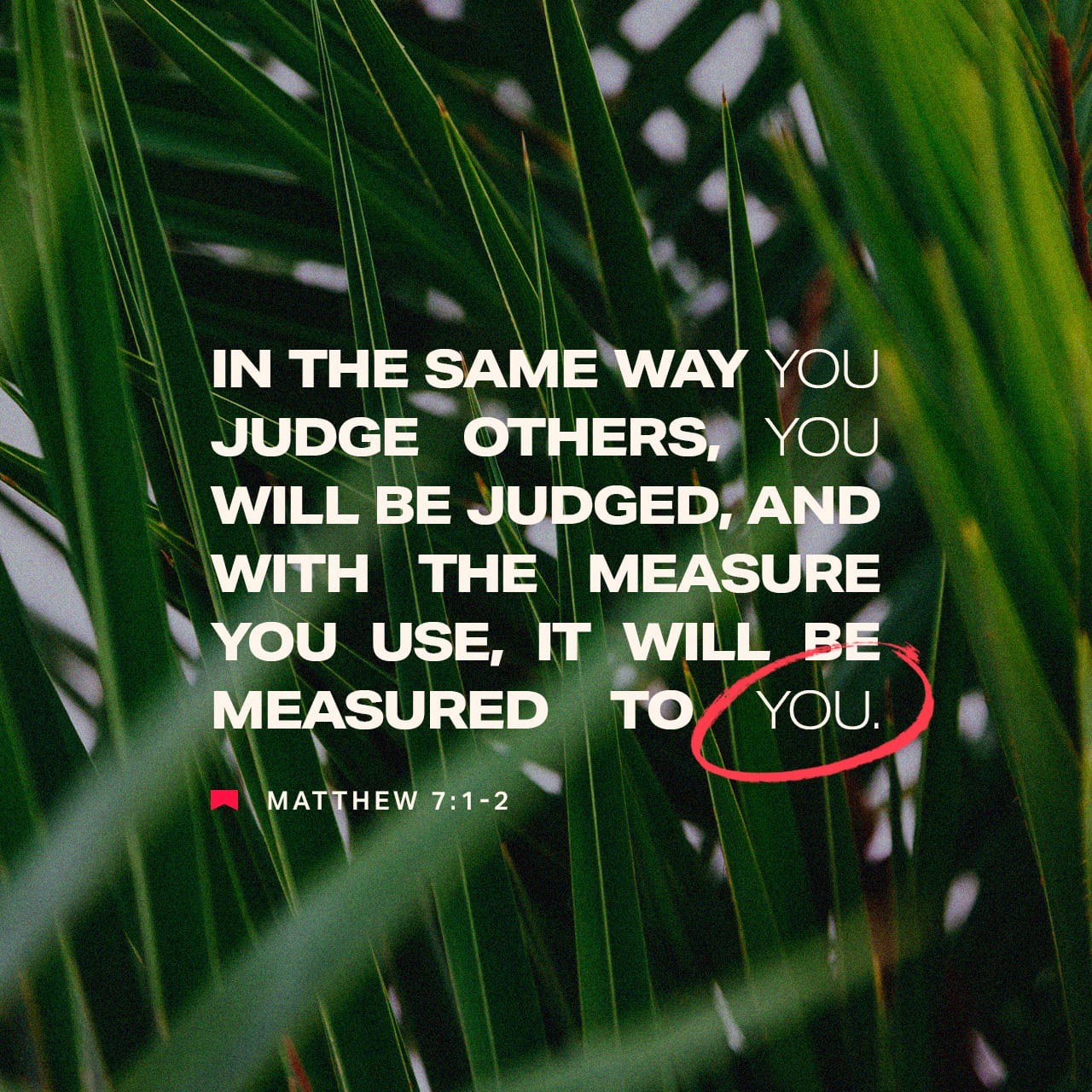
[1-5] “Don’t pick on people, jump on their failures, criticize their faults—unless, of course, you want the same treatment. That critical spirit has a way of boomeranging. It’s easy to see a smudge on your neighbor’s face and be oblivious to the ugly sneer on your own. Do you have the nerve to say, ‘Let me wash your face for you,’ when your own face is distorted by contempt? It’s this whole traveling road-show mentality all over again, playing a holier-than-thou part instead of just living your part. Wipe that ugly sneer off your own face, and you might be fit to offer a washcloth to your neighbor. [6] “Don’t be flip with the sacred. Banter and silliness give no honor to God. Don’t reduce holy mysteries to slogans. In trying to be relevant, you’re only being cute and inviting sacrilege. [7-11] “Don’t bargain with God. Be direct. Ask for what you need. This isn’t a cat-and-mouse, hide-and-seek game we’re in. If your child asks for bread, do you trick him with sawdust? If he asks for fish, do you scare him with a live snake on his plate? As bad as you are, you wouldn’t think of such a thing. You’re at least decent to your own children. So don’t you think the God who conceived you in love will be even better? [12] “Here is a simple, rule-of-thumb guide for behavior: Ask yourself what you want people to do for you, then grab the initiative and do it for them. Add up God’s Law and Prophets and this is what you get. [13-14] “Don’t look for shortcuts to God. The market is flooded with surefire, easygoing formulas for a successful life that can be practiced in your spare time. Don’t fall for that stuff, even though crowds of people do. The way to life—to God!—is vigorous and requires total attention. [15-20] “Be wary of false preachers who smile a lot, dripping with practiced sincerity. Chances are they are out to rip you off some way or other. Don’t be impressed with charisma; look for character. Who preachers are is the main thing, not what they say. A genuine leader will never exploit your emotions or your pocketbook. These diseased trees with their bad apples are going to be chopped down and burned. [21-23] “Knowing the correct password—saying ‘Master, Master,’ for instance—isn’t going to get you anywhere with me. What is required is serious obedience—doing what my Father wills. I can see it now—at the Final Judgment thousands strutting up to me and saying, ‘Master, we preached the Message, we bashed the demons, our super-spiritual projects had everyone talking.’ And do you know what I am going to say? ‘You missed the boat. All you did was use me to make yourselves important. You don’t impress me one bit. You’re out of here.’ [24-25] “These words I speak to you are not incidental additions to your life, homeowner improvements to your standard of living. They are foundational words, words to build a life on. If you work these words into your life, you are like a smart carpenter who built his house on solid rock. Rain poured down, the river flooded, a tornado hit—but nothing moved that house. It was fixed to the rock. [26-27] “But if you just use my words in Bible studies and don’t work them into your life, you are like a stupid carpenter who built his house on the sandy beach. When a storm rolled in and the waves came up, it collapsed like a house of cards.” [28-29] When Jesus concluded his address, the crowd burst into applause. They had never heard teaching like this. It was apparent that he was living everything he was saying—quite a contrast to their religion teachers! This was the best teaching they had ever heard.https://bible.com/bible/97/mat.7.1-29.MSG
-
Matthew 6:1-34 MSG
[1] “Be especially careful when you are trying to be good so that you don’t make a performance out of it. It might be good theater, but the God who made you won’t be applauding. [2-4] “When you do something for someone else, don’t call attention to yourself. You’ve seen them in action, I’m sure—‘playactors’ I call them—treating prayer meeting and street corner alike as a stage, acting compassionate as long as someone is watching, playing to the crowds. They get applause, true, but that’s all they get. When you help someone out, don’t think about how it looks. Just do it—quietly and unobtrusively. That is the way your God, who conceived you in love, working behind the scenes, helps you out. [5] “And when you come before God, don’t turn that into a theatrical production either. All these people making a regular show out of their prayers, hoping for fifteen minutes of fame! Do you think God sits in a box seat? [6] “Here’s what I want you to do: Find a quiet, secluded place so you won’t be tempted to role-play before God. Just be there as simply and honestly as you can manage. The focus will shift from you to God, and you will begin to sense his grace. [7-13] “The world is full of so-called prayer warriors who are prayer-ignorant. They’re full of formulas and programs and advice, peddling techniques for getting what you want from God. Don’t fall for that nonsense. This is your Father you are dealing with, and he knows better than you what you need. With a God like this loving you, you can pray very simply. Like this: Our Father in heaven, Reveal who you are. Set the world right; Do what’s best— as above, so below. Keep us alive with three square meals. Keep us forgiven with you and forgiving others. Keep us safe from ourselves and the Devil. You’re in charge! You can do anything you want! You’re ablaze in beauty! Yes. Yes. Yes. [14-15] “In prayer there is a connection between what God does and what you do. You can’t get forgiveness from God, for instance, without also forgiving others. If you refuse to do your part, you cut yourself off from God’s part. [16-18] “When you practice some appetite-denying discipline to better concentrate on God, don’t make a production out of it. It might turn you into a small-time celebrity but it won’t make you a saint. If you ‘go into training’ inwardly, act normal outwardly. Shampoo and comb your hair, brush your teeth, wash your face. God doesn’t require attention-getting devices. He won’t overlook what you are doing; he’ll reward you well. [19-21] “Don’t hoard treasure down here where it gets eaten by moths and corroded by rust or—worse!—stolen by burglars. Stockpile treasure in heaven, where it’s safe from moth and rust and burglars. It’s obvious, isn’t it? The place where your treasure is, is the place you will most want to be, and end up being. [22-23] “Your eyes are windows into your body. If you open your eyes wide in wonder and belief, your body fills up with light. If you live squinty-eyed in greed and distrust, your body is a musty cellar. If you pull the blinds on your windows, what a dark life you will have! [24] “You can’t worship two gods at once. Loving one god, you’ll end up hating the other. Adoration of one feeds contempt for the other. You can’t worship God and Money both. [25-26] “If you decide for God, living a life of God-worship, it follows that you don’t fuss about what’s on the table at mealtimes or whether the clothes in your closet are in fashion. There is far more to your life than the food you put in your stomach, more to your outer appearance than the clothes you hang on your body. Look at the birds, free and unfettered, not tied down to a job description, careless in the care of God. And you count far more to him than birds. [27-29] “Has anyone by fussing in front of the mirror ever gotten taller by so much as an inch? All this time and money wasted on fashion—do you think it makes that much difference? Instead of looking at the fashions, walk out into the fields and look at the wildflowers. They never primp or shop, but have you ever seen color and design quite like it? The ten best-dressed men and women in the country look shabby alongside them. [30-33] “If God gives such attention to the appearance of wildflowers—most of which are never even seen—don’t you think he’ll attend to you, take pride in you, do his best for you? What I’m trying to do here is to get you to relax, to not be so preoccupied with getting, so you can respond to God’s giving. People who don’t know God and the way he works fuss over these things, but you know both God and how he works. Steep your life in God-reality, God-initiative, God-provisions. Don’t worry about missing out. You’ll find all your everyday human concerns will be met. [34] “Give your entire attention to what God is doing right now, and don’t get worked up about what may or may not happen tomorrow. God will help you deal with whatever hard things come up when the time comes.…[Read more] -
Matthew 5:1-48 MSG
[1-2] When Jesus saw his ministry drawing huge crowds, he climbed a hillside. Those who were apprenticed to him, the committed, climbed with him. Arriving at a quiet place, he sat down and taught his climbing companions. This is what he said: [3] “You’re blessed when you’re at the end of your rope. With less of you there is more of God and his rule. [4] “You’re blessed when you feel you’ve lost what is most dear to you. Only then can you be embraced by the One most dear to you. [5] “You’re blessed when you’re content with just who you are—no more, no less. That’s the moment you find yourselves proud owners of everything that can’t be bought. [6] “You’re blessed when you’ve worked up a good appetite for God. He’s food and drink in the best meal you’ll ever eat. [7] “You’re blessed when you care. At the moment of being ‘care-full,’ you find yourselves cared for. [8] “You’re blessed when you get your inside world—your mind and heart—put right. Then you can see God in the outside world. [9] “You’re blessed when you can show people how to cooperate instead of compete or fight. That’s when you discover who you really are, and your place in God’s family. [10] “You’re blessed when your commitment to God provokes persecution. The persecution drives you even deeper into God’s kingdom. [11-12] “Not only that—count yourselves blessed every time people put you down or throw you out or speak lies about you to discredit me. What it means is that the truth is too close for comfort and they are uncomfortable. You can be glad when that happens—give a cheer, even!—for though they don’t like it, I do! And all heaven applauds. And know that you are in good company. My prophets and witnesses have always gotten into this kind of trouble. [13] “Let me tell you why you are here. You’re here to be salt-seasoning that brings out the God-flavors of this earth. If you lose your saltiness, how will people taste godliness? You’ve lost your usefulness and will end up in the garbage. [14-16] “Here’s another way to put it: You’re here to be light, bringing out the God-colors in the world. God is not a secret to be kept. We’re going public with this, as public as a city on a hill. If I make you light-bearers, you don’t think I’m going to hide you under a bucket, do you? I’m putting you on a light stand. Now that I’ve put you there on a hilltop, on a light stand—shine! Keep open house; be generous with your lives. By opening up to others, you’ll prompt people to open up with God, this generous Father in heaven. [17-18] “Don’t suppose for a minute that I have come to demolish the Scriptures—either God’s Law or the Prophets. I’m not here to demolish but to complete. I am going to put it all together, pull it all together in a vast panorama. God’s Law is more real and lasting than the stars in the sky and the ground at your feet. Long after stars burn out and earth wears out, God’s Law will be alive and working. [19-20] “Trivialize even the smallest item in God’s Law and you will only have trivialized yourself. But take it seriously, show the way for others, and you will find honor in the kingdom. Unless you do far better than the Pharisees in the matters of right living, you won’t know the first thing about entering the kingdom. [21-22] “You’re familiar with the command to the ancients, ‘Do not murder.’ I’m telling you that anyone who is so much as angry with a brother or sister is guilty of murder. Carelessly call a brother ‘idiot!’ and you just might find yourself hauled into court. Thoughtlessly yell ‘stupid!’ at a sister and you are on the brink of hellfire. The simple moral fact is that words kill. [23-24] “This is how I want you to conduct yourself in these matters. If you enter your place of worship and, about to make an offering, you suddenly remember a grudge a friend has against you, abandon your offering, leave immediately, go to this friend and make things right. Then and only then, come back and work things out with God. [25-26] “Or say you’re out on the street and an old enemy accosts you. Don’t lose a minute. Make the first move; make things right with him. After all, if you leave the first move to him, knowing his track record, you’re likely to end up in court, maybe even jail. If that happens, you won’t get out without a stiff fine. [27-28] “You know the next commandment pretty well, too: ‘Don’t go to bed with another’s spouse.’ But don’t think you’ve preserved your virtue simply by staying out of bed. Your heart can be corrupted by lust even quicker than your body. Those ogling looks you think nobody notices—they also corrupt. [29-30] “Let’s not pretend this is easier than it really is. If you want to live a morally pure life, here’s what you have to do: You have to blind your right eye the moment you catch it in a lustful leer. You have to choose to live one-eyed or else be dumped on a moral trash pile. And you have to chop off your right hand the moment you notice it raised threatening…[Read more] -
 Replying to comment by:
(P.S. Yes, it is Wednesday where I am (middle of the week). Because of my work schedule, my \”weekend\” is Sunday-Tuesday.)
-
Sorry, guys, I\’ve a weekend of rest and it might have been too much rest. I completely forgot about posting today!
Matthew 4:1-25 MSG
[1-3] Next Jesus was taken into the wild by the Spirit for the Test. The Devil was ready to give it. Jesus prepared for the Test by fasting forty days and forty nights. That left him, of course, in a state of extreme hunger, which the Devil took advantage of in the first test: “Since you are God’s Son, speak the word that will turn these stones into loaves of bread.” [4] Jesus answered by quoting Deuteronomy: “It takes more than bread to stay alive. It takes a steady stream of words from God’s mouth.” [5-6] For the second test the Devil took him to the Holy City. He sat him on top of the Temple and said, “Since you are God’s Son, jump.” The Devil goaded him by quoting Psalm 91: “He has placed you in the care of angels. They will catch you so that you won’t so much as stub your toe on a stone.” [7] Jesus countered with another citation from Deuteronomy: “Don’t you dare test the Lord your God.” [8-9] For the third test, the Devil took him to the peak of a huge mountain. He gestured expansively, pointing out all the earth’s kingdoms, how glorious they all were. Then he said, “They’re yours—lock, stock, and barrel. Just go down on your knees and worship me, and they’re yours.” [10] Jesus’ refusal was curt: “Beat it, Satan!” He backed his rebuke with a third quotation from Deuteronomy: “Worship the Lord your God, and only him. Serve him with absolute single-heartedness.” [11] The Test was over. The Devil left. And in his place, angels! Angels came and took care of Jesus’ needs. [12-17] When Jesus got word that John had been arrested, he returned to Galilee. He moved from his hometown, Nazareth, to the lakeside village Capernaum, nestled at the base of the Zebulun and Naphtali hills. This move completed Isaiah’s revelation: Land of Zebulun, land of Naphtali, road to the sea, over Jordan, Galilee, crossroads for the nations. People sitting out their lives in the dark saw a huge light; Sitting in that dark, dark country of death, they watched the sun come up. This Isaiah-prophesied revelation came to life in Galilee the moment Jesus started preaching. He picked up where John left off: “Change your life. God’s kingdom is here.” [18-20] Walking along the beach of Lake Galilee, Jesus saw two brothers: Simon (later called Peter) and Andrew. They were fishing, throwing their nets into the lake. It was their regular work. Jesus said to them, “Come with me. I’ll make a new kind of fisherman out of you. I’ll show you how to catch men and women instead of perch and bass.” They didn’t ask questions, but simply dropped their nets and followed. [21-22] A short distance down the beach they came upon another pair of brothers, James and John, Zebedee’s sons. These two were sitting in a boat with their father, Zebedee, mending their fishnets. Jesus made the same offer to them, and they were just as quick to follow, abandoning boat and father. [23-25] From there he went all over Galilee. He used synagogues for meeting places and taught people the truth of God. God’s kingdom was his theme—that beginning right now they were under God’s government, a good government! He also healed people of their diseases and of the bad effects of their bad lives. Word got around the entire Roman province of Syria. People brought anybody with a sickness, whether mental, emotional, or physical. Jesus healed them, one and all. More and more people came, the momentum gathering. Besides those from Galilee, crowds came from the “Ten Towns” across the lake, others up from Jerusalem and Judea, still others from across the Jordan.-
(P.S. Yes, it is Wednesday where I am (middle of the week). Because of my work schedule, my “weekend” is Sunday-Tuesday.)
2024-04-17 18:17:18 UTC
-
Matthew 3:1-17 MSG
[1-2] While Jesus was living in the Galilean hills, John, called “the Baptizer,” was preaching in the desert country of Judea. His message was simple and austere, like his desert surroundings: “Change your life. God’s kingdom is here.” [3] John and his message were authorized by Isaiah’s prophecy: Thunder in the desert! Prepare for God’s arrival! Make the road smooth and straight! [4-6] John dressed in a camel-hair habit tied at the waist by a leather strap. He lived on a diet of locusts and wild field honey. People poured out of Jerusalem, Judea, and the Jordanian countryside to hear and see him in action. There at the Jordan River those who came to confess their sins were baptized into a changed life. [7-10] When John realized that a lot of Pharisees and Sadducees were showing up for a baptismal experience because it was becoming the popular thing to do, he exploded: “Brood of snakes! What do you think you’re doing slithering down here to the river? Do you think a little water on your snakeskins is going to make any difference? It’s your life that must change, not your skin! And don’t think you can pull rank by claiming Abraham as father. Being a descendant of Abraham is neither here nor there. Descendants of Abraham are a dime a dozen. What counts is your life. Is it green and flourishing? Because if it’s deadwood, it goes on the fire. [11-12] “I’m baptizing you here in the river, turning your old life in for a kingdom life. The real action comes next: The main character in this drama—compared to him I’m a mere stagehand—will ignite the kingdom life within you, a fire within you, the Holy Spirit within you, changing you from the inside out. He’s going to clean house—make a clean sweep of your lives. He’ll place everything true in its proper place before God; everything false he’ll put out with the trash to be burned.” * * * [13-14] Jesus then appeared, arriving at the Jordan River from Galilee. He wanted John to baptize him. John objected, “I’m the one who needs to be baptized, not you!” [15] But Jesus insisted. “Do it. God’s work, putting things right all these centuries, is coming together right now in this baptism.” So John did it. [16-17] The moment Jesus came up out of the baptismal waters, the skies opened up and he saw God’s Spirit—it looked like a dove—descending and landing on him. And along with the Spirit, a voice: “This is my Son, chosen and marked by my love, delight of my life.” -
Matthew 2:1-23 MSG
[1-2] After Jesus was born in Bethlehem village, Judah territory—this was during Herod’s kingship—a band of scholars arrived in Jerusalem from the East. They asked around, “Where can we find and pay homage to the newborn King of the Jews? We observed a star in the eastern sky that signaled his birth. We’re on pilgrimage to worship him.” [3-4] When word of their inquiry got to Herod, he was terrified—and not Herod alone, but most of Jerusalem as well. Herod lost no time. He gathered all the high priests and religion scholars in the city together and asked, “Where is the Messiah supposed to be born?” [5-6] They told him, “Bethlehem, Judah territory. The prophet Micah wrote it plainly: It’s you, Bethlehem, in Judah’s land, no longer bringing up the rear. From you will come the leader who will shepherd-rule my people, my Israel.” [7-8] Herod then arranged a secret meeting with the scholars from the East. Pretending to be as devout as they were, he got them to tell him exactly when the birth-announcement star appeared. Then he told them the prophecy about Bethlehem, and said, “Go find this child. Leave no stone unturned. As soon as you find him, send word and I’ll join you at once in your worship.” [9-10] Instructed by the king, they set off. Then the star appeared again, the same star they had seen in the eastern skies. It led them on until it hovered over the place of the child. They could hardly contain themselves: They were in the right place! They had arrived at the right time! [11] They entered the house and saw the child in the arms of Mary, his mother. Overcome, they kneeled and worshiped him. Then they opened their luggage and presented gifts: gold, frankincense, myrrh. [12] In a dream, they were warned not to report back to Herod. So they worked out another route, left the territory without being seen, and returned to their own country. * * * [13] After the scholars were gone, God’s angel showed up again in Joseph’s dream and commanded, “Get up. Take the child and his mother and flee to Egypt. Stay until further notice. Herod is on the hunt for this child, and wants to kill him.” [14-15] Joseph obeyed. He got up, took the child and his mother under cover of darkness. They were out of town and well on their way by daylight. They lived in Egypt until Herod’s death. This Egyptian exile fulfilled what Hosea had preached: “I called my son out of Egypt.” [16-18] Herod, when he realized that the scholars had tricked him, flew into a rage. He commanded the murder of every little boy two years old and under who lived in Bethlehem and its surrounding hills. (He determined that age from information he’d gotten from the scholars.) That’s when Jeremiah’s revelation was fulfilled: A sound was heard in Ramah, weeping and much lament. Rachel weeping for her children, Rachel refusing all solace, Her children gone, dead and buried. [19-20] Later, when Herod died, God’s angel appeared in a dream to Joseph in Egypt: “Up, take the child and his mother and return to Israel. All those out to murder the child are dead.” [21-23] Joseph obeyed. He got up, took the child and his mother, and reentered Israel. When he heard, though, that Archelaus had succeeded his father, Herod, as king in Judea, he was afraid to go there. But then Joseph was directed in a dream to go to the hills of Galilee. On arrival, he settled in the village of Nazareth. This move was a fulfillment of the prophetic words, “He shall be called a Nazarene.”https://bible.com/bible/97/mat.2.1-23.MSG

-
Here is the first chapter of Matthew, the first book of the New Testament.
Matthew 1:1-25 MSG
[1] The family tree of Jesus Christ, David’s son, Abraham’s son: [2-6a] Abraham had Isaac, Isaac had Jacob, Jacob had Judah and his brothers, Judah had Perez and Zerah (the mother was Tamar), Perez had Hezron, Hezron had Aram, Aram had Amminadab, Amminadab had Nahshon, Nahshon had Salmon, Salmon had Boaz (his mother was Rahab), Boaz had Obed (Ruth was the mother), Obed had Jesse, Jesse had David, and David became king. [6b-11] David had Solomon (Uriah’s wife was the mother), Solomon had Rehoboam, Rehoboam had Abijah, Abijah had Asa, Asa had Jehoshaphat, Jehoshaphat had Joram, Joram had Uzziah, Uzziah had Jotham, Jotham had Ahaz, Ahaz had Hezekiah, Hezekiah had Manasseh, Manasseh had Amon, Amon had Josiah, Josiah had Jehoiachin and his brothers, and then the people were taken into the Babylonian exile. [12-16] When the Babylonian exile ended, Jeconiah had Shealtiel, Shealtiel had Zerubbabel, Zerubbabel had Abiud, Abiud had Eliakim, Eliakim had Azor, Azor had Zadok, Zadok had Achim, Achim had Eliud, Eliud had Eleazar, Eleazar had Matthan, Matthan had Jacob, Jacob had Joseph, Mary’s husband, the Mary who gave birth to Jesus, the Jesus who was called Christ. [17] There were fourteen generations from Abraham to David, another fourteen from David to the Babylonian exile, and yet another fourteen from the Babylonian exile to Christ. [18-19] The birth of Jesus took place like this. His mother, Mary, was engaged to be married to Joseph. Before they enjoyed their wedding night, Joseph discovered she was pregnant. (It was by the Holy Spirit, but he didn’t know that.) Joseph, chagrined but noble, determined to take care of things quietly so Mary would not be disgraced. [20-23] While he was trying to figure a way out, he had a dream. God’s angel spoke in the dream: “Joseph, son of David, don’t hesitate to get married. Mary’s pregnancy is Spirit-conceived. God’s Holy Spirit has made her pregnant. She will bring a son to birth, and when she does, you, Joseph, will name him Jesus—‘God saves’—because he will save his people from their sins.” This would bring the prophet’s embryonic revelation to full term: Watch for this—a virgin will get pregnant and bear a son; They will name him Immanuel (Hebrew for “God is with us”). [24-25] Then Joseph woke up. He did exactly what God’s angel commanded in the dream: He married Mary. But he did not consummate the marriage until she had the baby. He named the baby Jesus. -
This is the last chapter of the Old Testament. YAY! Tomorrow, we\’ll start on Matthew, the first chapter of the New Testament. Since we\’re out of the O.T., I may take a break from posting 3 a day.
Malachi 4:1-6 MSG
[1-3] “Count on it: The day is coming, raging like a forest fire. All the arrogant people who do evil things will be burned up like stove wood, burned to a crisp, nothing left but scorched earth and ash—a black day. But for you, sunrise! The sun of righteousness will dawn on those who honor my name, healing radiating from its wings. You will be bursting with energy, like colts frisky and frolicking. And you’ll tromp on the wicked. They’ll be nothing but ashes under your feet on that Day.” God-of-the-Angel-Armies says so. [4] “Remember and keep the revelation I gave through my servant Moses, the revelation I commanded at Horeb for all Israel, all the rules and procedures for right living. [5-6] “But also look ahead: I’m sending Elijah the prophet to clear the way for the Big Day of God—the decisive Judgment Day! He will convince parents to look after their children and children to look up to their parents. If they refuse, I’ll come and put the land under a curse.” -
Malachi 3:1-18 MSG
[1] “Look! I’m sending my messenger on ahead to clear the way for me. Suddenly, out of the blue, the Leader you’ve been looking for will enter his Temple—yes, the Messenger of the Covenant, the one you’ve been waiting for. Look! He’s on his way!” A Message from the mouth of God-of-the-Angel-Armies. [2-4] But who will be able to stand up to that coming? Who can survive his appearance? He’ll be like white-hot fire from the smelter’s furnace. He’ll be like the strongest lye soap at the laundry. He’ll take his place as a refiner of silver, as a cleanser of dirty clothes. He’ll scrub the Levite priests clean, refine them like gold and silver, until they’re fit for God, fit to present offerings of righteousness. Then, and only then, will Judah and Jerusalem be fit and pleasing to God, as they used to be in the years long ago. * * * [5] “Yes, I’m on my way to visit you with Judgment. I’ll present compelling evidence against sorcerers, adulterers, liars, those who exploit workers, those who take advantage of widows and orphans, those who are inhospitable to the homeless—anyone and everyone who doesn’t honor me.” A Message from God-of-the-Angel-Armies. * * * [6-7] “I am God—yes, I Am. I haven’t changed. And because I haven’t changed, you, the descendants of Jacob, haven’t been destroyed. You have a long history of ignoring my commands. You haven’t done a thing I’ve told you. Return to me so I can return to you,” says God-of-the-Angel-Armies. “You ask, ‘But how do we return?’ [8-11] “Begin by being honest. Do honest people rob God? But you rob me day after day. “You ask, ‘How have we robbed you?’ “The tithe and the offering—that’s how! And now you’re under a curse—the whole lot of you—because you’re robbing me. Bring your full tithe to the Temple treasury so there will be ample provisions in my Temple. Test me in this and see if I don’t open up heaven itself to you and pour out blessings beyond your wildest dreams. For my part, I will defend you against marauders, protect your wheat fields and vegetable gardens against plunderers.” The Message of God-of-the-Angel-Armies. [12] “You’ll be voted ‘Happiest Nation.’ You’ll experience what it’s like to be a country of grace.” God-of-the-Angel-Armies says so. [13] God says, “You have spoken hard, rude words to me. “You ask, ‘When did we ever do that?’ [14-15] “When you said, ‘It doesn’t pay to serve God. What do we ever get out of it? When we did what he said and went around with long faces, serious about God-of-the-Angel-Armies, what difference did it make? Those who take life into their own hands are the lucky ones. They break all the rules and get ahead anyway. They push God to the limit and get by with it.’” [16] Then those whose lives honored God got together and talked it over. God saw what they were doing and listened in. A book was opened in God’s presence and minutes were taken of the meeting, with the names of the God-fearers written down, all the names of those who honored God’s name. [17-18] God-of-the-Angel-Armies said, “They’re mine, all mine. They’ll get special treatment when I go into action. I treat them with the same consideration and kindness that parents give the child who honors them. Once more you’ll see the difference it makes between being a person who does the right thing and one who doesn’t, between serving God and not serving him.”https://bible.com/bible/97/mal.3.1-18.MSG

- Load More


