
![Profile picture of scarlett [dormant account]](https://sticknodes.com/wp-content/uploads/avatars/42203/63eed8fd4e3b5-bpfull.jpg)


@stk-sonic


Joined on October 29th, 2020, this user has been a member for 2,044 days and is the 42,203rd person to register an account.
Has 13 submissions, the first one uploaded on June 15th, 2020 and the most recent on June 22nd, 2020.
Of those, 0 have been featured and 1 has won Users' Choice.
On average, each submission earns 13 downloads.
In total, they have been download 39 times.
Counting every individual stickfigure, including the contents of all packs, this user has technically made and submitted 8 stickfigures.
On average, when this user rates stickfigures, they are 48% positive.
Also, they are typically 33% positive when rating animation spotlights.
Has made 266 comments on non-activity pages of the site. Alternatively, this user has made 7,688 comments on actual activity pages of the site.
This member is not a Users' Choice voter.
Show More Scarlett's Art MasterpiecesOwner
 Cat FactsOwner
 Scarlett's BirthdayOwner
 I will make a song for you [CLOSED PERMANENTLY]Owner
 Scarlett reviews thingsOwner
 Satellites SeriesOwner
 Scarlett Makes Music SometimesOwner
 Scarlett’s Group of DumbfuckeryOwner
 Sonic: ResistanceOwner
 No Contextadmin
 The Posseadmin
 Rene’s Groupadmin


-
![Profile picture of scarlett [dormant account]](https://sticknodes.com/wp-content/uploads/avatars/42203/63eed8fd52387-bpthumb.jpg) Replying to comment by:
Replying to comment by:The celesta, or celeste, also called a bell-piano, is a struck idiophone operated by a keyboard. It looks similar to an upright piano (four or five-octave), albeit with smaller keys and a much smaller cabinet, or a large wooden music box (three-octave). The keys connect to hammers that strike a graduated set of metal (usually steel) plates or bars suspended over wooden resonators. Four-or five-octave models usually have a damper pedal that sustains or damps the sound. The three-octave instruments do not have a pedal because of their small “table-top” design. One of the best-known works that uses the celesta is Pyotr Ilyich Tchaikovsky’s “Dance of the Sugar Plum Fairy” from The Nutcracker.
-
Replying to comment by:
another day, another banger from jerell
-
Replying to comment by:
glk’s been doing it longer, just he hasn’t done it recently
-
Replying to comment by:
he has a running “joke” that he’s maawoz’s alt
-
Replying to comment by:
was just watching that video earlier lol
-
Replying to comment by:
they’re putting chemicals in the water to turn the frogs gay
-
Replying to comment by:
it’s the gosh darn woke lgtv agenda corrupting our youth
-
Replying to comment by:
if it’s not obvious this is a rework of this older song
-
unfortunately there will not be a single on valentine’s day (i have business to attend to that day) so to make up for this tragedy you get this today
-
Replying to comment by:
i determined now that you should kill yourself
-
latest addition to my collection


-

we determined earlier that paramore sucks
2023-02-06 22:59:45 UTC-
Replying to:
i determined now that you should kill yourself
2023-02-06 23:00:27 UTC-
 Replying to:
 2023-02-06 23:14:55 UTC
-
Replying to comment by:
because the universe doesn\’t want me to be happy
-
Replying to comment by:
the watchful eye of the aussie sees all
-
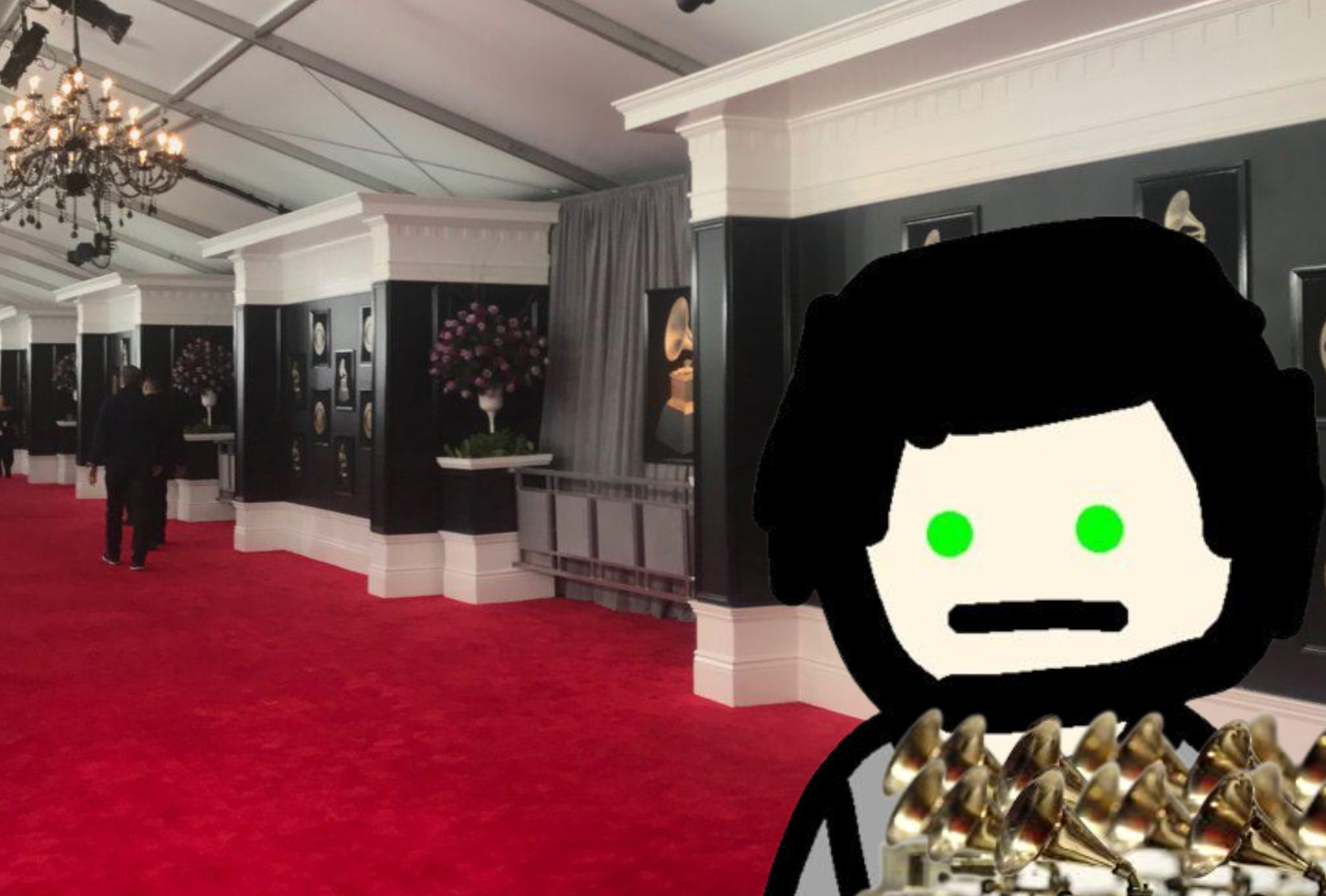
me leaving the grammys after winning every award (real)
-

She’s going to get her pickup truck , she has a few more trips due to the sheer amount of trophies
2023-02-06 03:19:27 UTC
-
Replying to comment by:
Avatar (Sanskrit: अवतार, avatāra; pronounced [ɐʋɐtaːrɐ]), is a concept within Hinduism that in Sanskrit literally means \”descent\”. It signifies the material appearance or incarnation of a powerful deity, goddess or spirit on Earth.[1][2] The relative verb to \”alight, to make one\’s appearance\” is sometimes used to refer to any guru or revered human being.
The word avatar does not appear in the Vedic literature;[5] however, it appears in developed forms in post-Vedic literature, and as a noun particularly in the Puranic literature after the 6th century CE.[6] Despite that, the concept of an avatar is compatible with the content of the Vedic literature like the Upanishads as it is symbolic imagery of the Saguna Brahman concept in the philosophy of Hinduism. The Rigveda describes Indra as endowed with a mysterious power of assuming any form at will.[7][8] The Bhagavad Gita expounds the doctrine of Avatara but with terms other than avatar.[6][4]Theologically, the term is most often associated with the Hindu god Vishnu, though the idea has been applied to other deities.[9] Varying lists of avatars of Vishnu appear in Hindu scriptures, including the ten Dashavatara of the Garuda Purana and the twenty-two avatars in the Bhagavata Purana, though the latter adds that the incarnations of Vishnu are innumerable.[10] The avatars of Vishnu are important in Vaishnavism theology. In the goddess-based Shaktism tradition of Hinduism, avatars of the Devi in different appearances such as Tripura Sundari, Durga and Kali are commonly found.[11][12][13] While avatars of other deities such as Ganesha and Shiva are also mentioned in medieval Hindu texts, this is minor and occasional.[14] The incarnation doctrine is one of the important differences between Vaishnavism and Shaivism traditions of Hinduism.[15][16]
Incarnation concepts that are in some aspects similar to avatar are also found in Buddhism,[17] Christianity,[5] and other religions.[17]
- Load More


![[DORMANT GOD KING]](https://sticknodes.com/wp-content/uploads/avatars/41740/64ec13e2eb741-bpthumb.jpg "[DORMANT GOD KING]")

if it’s not obvious this is a rework of this older song