

@boot2


Joined on December 12th, 2019, this user has been a member for 2,374 days and is the 30,543rd person to register an account.
Has 58 submissions, the first one uploaded on March 26th, 2018 and the most recent on February 17th, 2026.
Of those, 2 have been featured and 14 have won Users' Choice.
On average, each submission earns 2,602 downloads.
In total, they have been download 150,957 times.
Counting every individual stickfigure, including the contents of all packs, this user has technically made and submitted 170 stickfigures.
On average, when this user rates stickfigures, they are 87% positive.
Has made 53 comments on non-activity pages of the site. Alternatively, this user has made 2,745 comments on actual activity pages of the site.
They have visited the site consecutively for 270 days, their best streak also being 270 days. On average, they post 10 updates and 43 comments per week.
This member is a Users' Choice voter!
Their current voting streak is 334 and their longest streak is 334 consecutive votes.










-
 Replying to comment by:
Palipus plants grow in abundance across the many arid deserts of Skarpticus. They spend much of their long lives absorbing rain water. Once sexually mature and pollinated, palipus plants will develop their massive pods. When the fruit inside each pod ripens, the plant redirects as much water as possible into the fruits, causing their thick husks to burst open and reveal their fleshy innards.
This water redirection kills the plant in the process, but makes the fruit juicy and refreshing for whatever comes to eat it.
The palipus plant relies on how nourishing it is for survival. Being so nutrient dense and refreshing in a dry desert makes it irresistible. An animal eats it seeds and disposes of them elsewhere, and the manure gives the seeds a fighting chance.
-
Soon there will be a palipus plant to go along with the pod, but that will come later as part of a dual feature with rihika stalks.

-
Replying to comment by:

-
Replying to comment by:

-
Replying to comment by:
He came back out of the blue and started harassing people. He was commenting on posts that are months old while acting smug and self-righteous.
-
Replying to comment by:

-
Replying to comment by:

-
Replying to comment by:
JOE MAMA
-
Replying to comment by:
Joe
-
Replying to comment by:
The Ancient Hawaiicons vs Daycortron
-
Replying to comment by:

-
Replying to comment by:
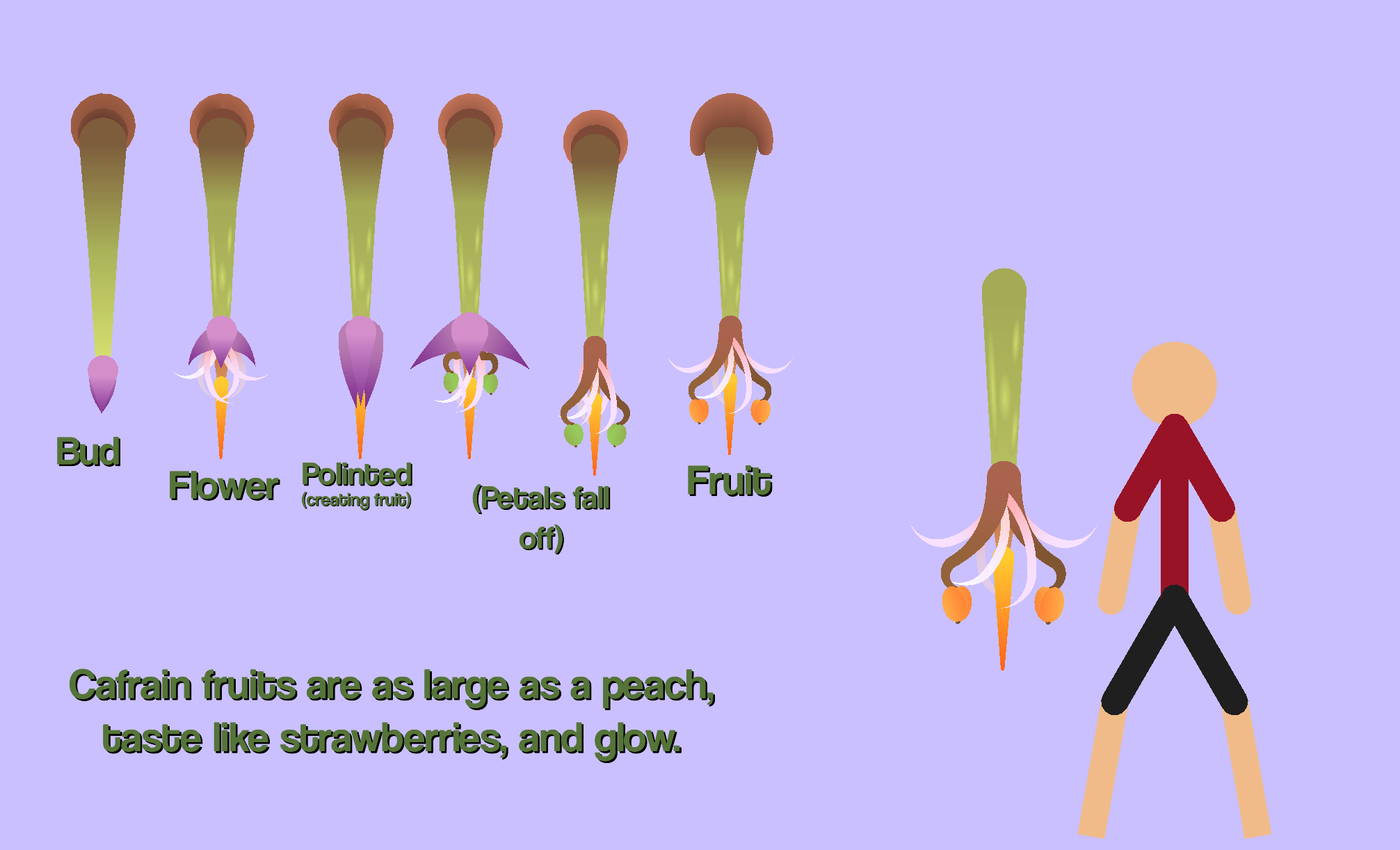
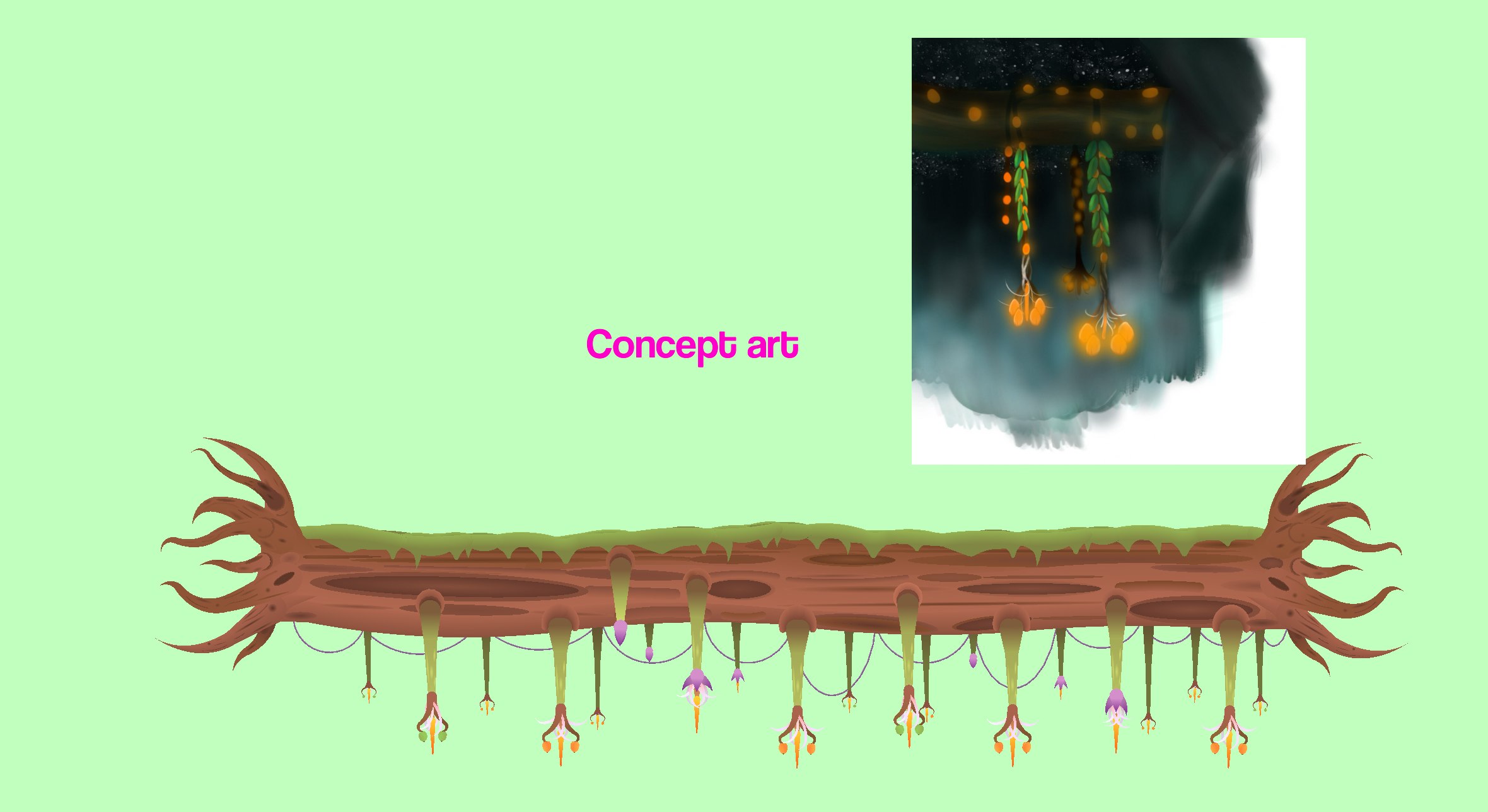
I don’t have the time to write any cool lore so here’s some notes:
1) Cafrains are very particular about where they’ll grow. Their lifecycle is dependent on both a river below them, rock walls on either side of them, and whatever cool animal that pollinates them that I haven’t come up with yet.
2) Cafrains are nearly extinct in the wild. There are dedicated sanctuaries across the planet where they thrive in huge numbers.
3) The moss on their logs isn’t actually moss. That is their leaves. They grow millions of tiny leaves on their surface, and it is functionally identical to moss.
-
Taking a little break from my Tiaseeb fig. I’m a bit worn out by it.
Instead, I’ll be doing alien plants from my sci-fi writings
Beginning with the cafrain, a critically endangered tree from the planet Fynarios

-
I don’t have the time to write any cool lore so here’s some notes:
1) Cafrains are very particular about where they’ll grow. Their lifecycle is dependent on both a river below them, rock walls on either side of them, and whatever cool animal that pollinates them that I haven’t come up with yet.
2) Cafrains are nearly extinct in the wild. There are dedicated sanctuaries across the planet where they thrive in huge numbers.
3) The moss on their logs isn’t actually moss. That is their leaves. They grow millions of tiny leaves on their surface, and it is functionally identical to moss.
2026-01-10 20:05:42 UTC
-
Replying to comment by:
Dude when you first posted this, I thought it was the Perferators from Calamity 😭
I looked it up and the first post you made had only a passing resemblance idk what the fuck I was on
-
Replying to comment by:
I love your pfp
- Load More


Palipus plants grow in abundance across the many arid deserts of Skarpticus. They spend much of their long lives absorbing rain water. Once sexually mature and pollinated, palipus plants will develop their massive pods. When the fruit inside each pod ripens, the plant redirects as much water as possible into the fruits, causing their thick husks to burst open and reveal their fleshy innards.
This water redirection kills the plant in the process, but makes the fruit juicy and refreshing for whatever comes to eat it.
The palipus plant relies on how nourishing it is for survival. Being so nutrient dense and refreshing in a dry desert makes it irresistible. An animal eats it seeds and disposes of them elsewhere, and the manure gives the seeds a fighting chance.
Btw this is kind of the inspiration
Like you’re supposed to reach into the burst husks and eat the exploded fruit by the handful.