
-
Welcome to Classy Critique 3! Today’s topic is…
Storyline!
Tons of seemingly-complicated and advanced stories can be boiled down to simple basics! This guide will go through those basics and build up on them in attempts to help you come up with a new understanding on how to create your own storylines!
First: What is a storyline?
According to Dictionary.com , a storyline is the plan, scheme, or main plot of a literary or dramatic work. A storyline essentially defines all the events of a tale in a DRAMATIC FASHION. This is the main reason why a STORY is different than a STORYLINE. While storylines can also be considered by themselves stories, the basic story is typically in chronological order. Storylines and plots, however, are made in a way to provide dramatic effect, flare, and conflict. They can jump back and forth through time if they need to so they can heighten dramatic effect. (Flashbacks, time travel, etc.)
Why are storylines important?
Storylines highlight EVERY SINGLE EVENT IN YOUR STORY. Everyone has a story, but the storyline is the way in which you tell it. There can’t be good characters without storyline to create who they are and what their personality is like. Storyline is an intrinsic aspect of any animation; nothing can exist without it. However, you can determine whether this storyline will be good or bad. So why not make it good? After all, storylines are required for pretty much any animation that you make provided it’s not a test or fighting-centered.
What is a good way to organize and start a story?
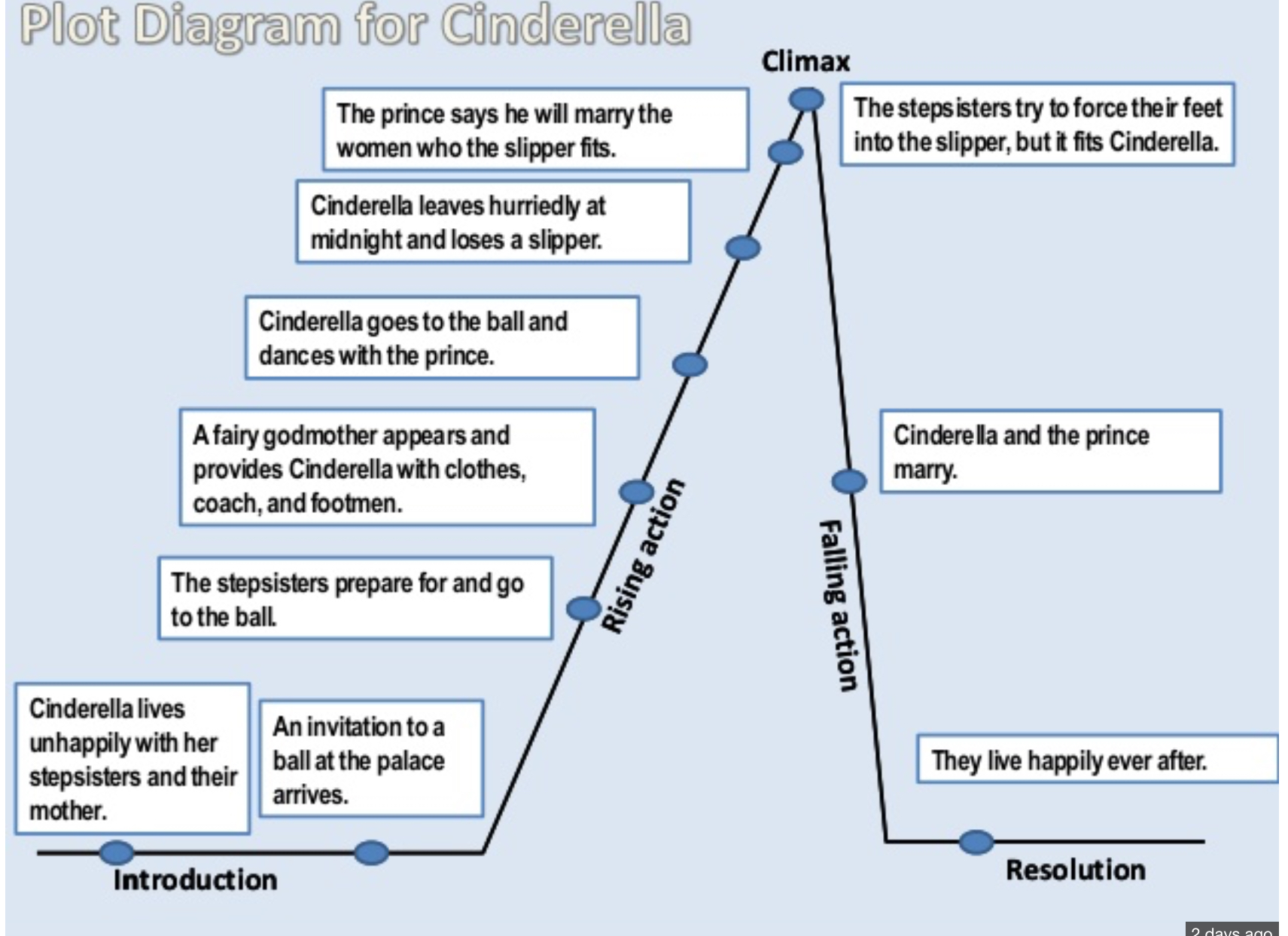
Some people are naturally more skilled with developing stories in their minds, but for those who have more trouble, there is no need to be upset or discouraged. Simply come up with an idea, and organize it using one of the various story graphs or charts out there. One of the easiest to use, but also one of the most useful, is the “Plot Diagram.”
The Plot Diagram:
According to readwritethink.org , “The Plot Diagram is an organizational tool focusing on a pyramid or triangular shape, which is used to map the events in a story. This mapping of plot structure allows readers and writers to visualize the key features of stories.” Plot diagrams allow animators to organize the events of their story into a simple yet effective diagram. The Plot diagram starts at the “INTRODUCTION,” which is explained by the name. The scene is set, history/important events are told to the audience, and the characters and conflict are introduced. Then, the diagram enters the “RISING ACTION” stage. After the conflict is introduced, the Rising Action shows how the characters interact with it. That conflict could be a psycho-murderer, a power-hungry tyrant, a destructive robot, or even just an illusion of the mind. The rising action highlights all the events that happen because of the conflict, with the exception of the final, climactic conflict. This leads to the “CLIMAX” stage. The final confrontation of the problem is at hand. At this definitive moment, a choice by the animator needs to be made. Will the protagonist triumph, or the conflict? After this stage, the “FALLING ACTION” occurs. Instead of building up to the climactic moment, the story instead wraps up the remaining story and ties some loose ends. Endings do not have to be either good winning or bad winning. There can be multiple ways to style it, with perhaps the good winning at a cost, or evil triumphing but without the glory. Falling Action eventually leads to the final parts of the animation, or “THE RESOLUTION.” The resolution is the conclusion of the animation’s story. Remember that “resolution” doesn’t mean it has to be a happy ending. It simply means the story IS ending. You, the animator, decide how it ends. Also remember that such a curve exists in most episodes of series as well. (exceptions are cliffhangers and flashbacks, etc.) This diagram can be used to highlight plots as a whole, smaller story arcs, or even just one episode. In fact, it would be wise to use this diagram for every episode, with the exception of cliffhangers, for its efficiency in organizing plot and creating suspense.
Next up, The Heroes Journey!
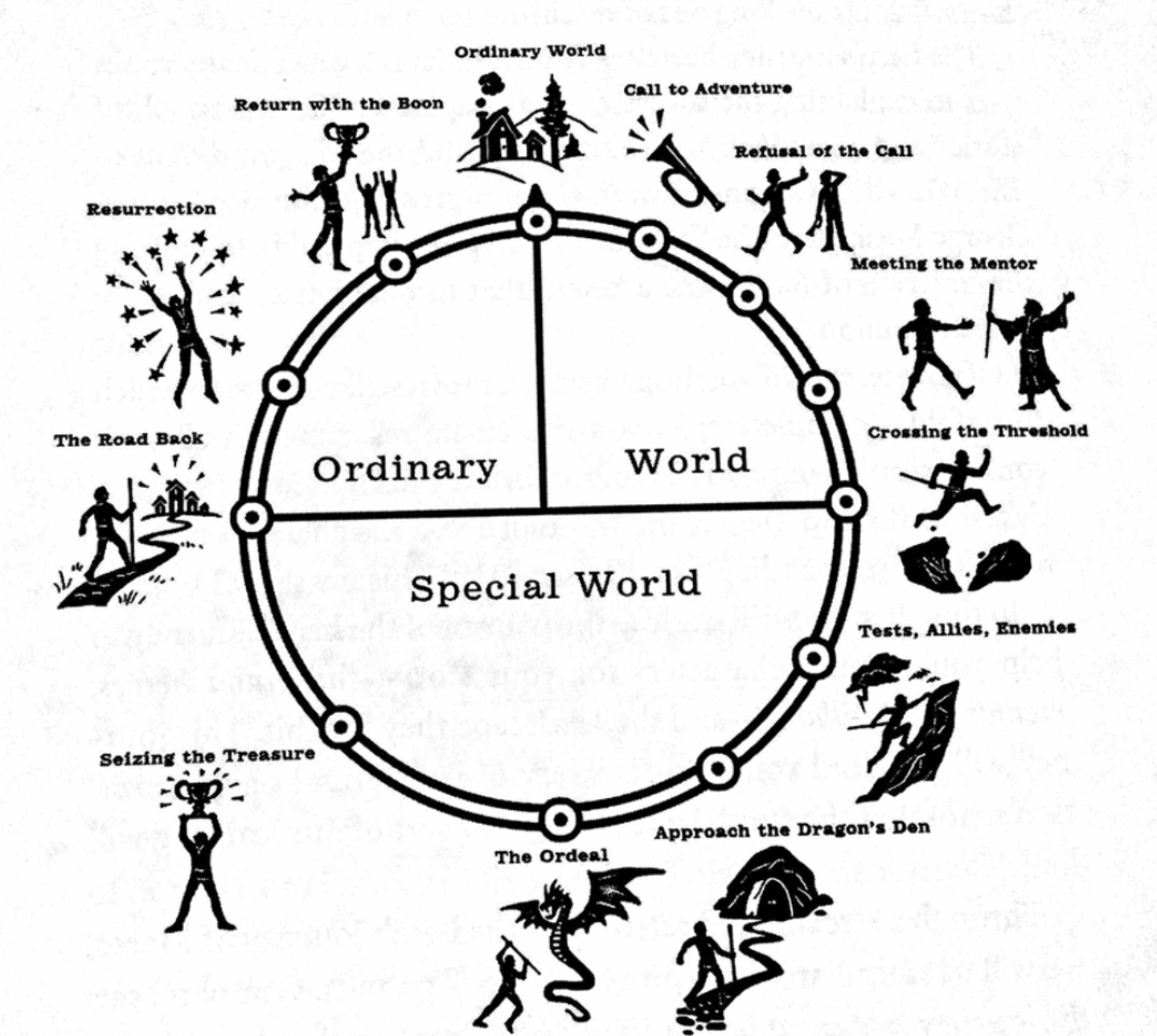
Storylines can be exciting for their interesting events and subject matters, but another equally important aspect of this is the story of the characters focused on. Protagonists and antagonists should receive plenty of storyline attention (unless your goal is to make them mysterious) in order to cement their contributions to the Plot and solidify their important status in regards to the story. How exactly does one set up the storyline arc of a character? They can use a simple outline of the Heroes Journey!
Essentially, the Heroes Journey is a rather standard diagram of how a hero progresses through their quest or destiny. These don’t happen every episode, but rather take place through the course of multiple episodes, or even through the entire story itself. This timing allows the audience to bond with the character and grow with them. It can make their victories sweeter if the character is a favorite, or devastate the viewers with their unexpected demise. I’ve left a picture of the Journey at the bottom, and I have a link to an article that explains the journey incredibly well. Read it for more information, I highly recommend it!
Article link is here: http://www.tlu.ee/~rajaleid/montaazh/Hero's%20Journey%20Arch.pdfRemember, none of this is set in stone! All the diagrams are here as guidelines for creating a story, but they aren’t rules! If you’ve got story ideas that don’t align with the diagrams, use em! Organization is very important in creating a storyline, but so is creativity! These are just here to emphasize that a story should be both interesting and orderly. A story made completely to the hero’s journey can be dull and boring, and a story without order but filled with creativity can be nonsensical and spontaneous for the audience. This is more so directed to the Heroes Journey, as the plot diagram is essentially describing every well-organized story lol.
Now, to go through my own gripes on the SN community and storylines.
1. STORYTELLING CANNOT HAPPEN THROUGH CONSTANT UNNECESSARY FIGHTING!
This is perhaps the biggest problem of SN storylines. Well, this and the second point. Essentially, many SN stories have the characters fight literally everything they come across. At this point, it isn’t out of the question to see one of the characters challenge a rock to a duel. DO NOT HAVE THE CHARACTERS CONSTANTLY FIGHT! Storyline is about telling an actual story, not showing a fight. Fighting and conflict are definitely necessary in a story, but do NOT center a story around fighting. Think of the Mass Effect series. (except Andromeda screw that game)As a YouTuber (cookie to whoever knows which one) stated in one of his videos reviewing the games, “The combat was fun, and a little strategic, but it was mostly satisfying because of the context for the shooting.” Give context for your fights when you’re making a story, give reasons! You don’t have to reveal absolutely everything, but it’s lazy storytelling to just randomly have some masked dudes and demons pop outta nowhere and attack everyone!
2. ACTUALLY GET PAST 3 EPISODES!
This is a problem with so many series’s in the SN community. Instead of sticking to one idea and pushing it to its limits, many animators take a series, run two or three episodes with it, then drop it and repeat. This is destructive for the creative aspect of the community. If you’ve got a story that you want to tell, don’t just give up on it! I understand if it just doesn’t work and you give it up, but don’t keep consistently giving up! Take your storyline and put your passion behind it! The community doesn’t need cooler figures! It doesn’t need flashy effects! It doesn’t need scarves! We’ve already got a ton of those! We need new stories, new ideas, new creativity! Don’t create those figures and effects just to show them off! Use them in a story, give them purpose!
Well, that’s all! I’ve actually got a lot of real work stuff to do, and these critiques take a lot of research and work to push out, so there will probably be a delay! Thanks everyone!
Have a Classy Day!
Stick Nodes®
A stickfigure animation app created for mobile devices!
Create your own stickman animations on your Android or iOS device!


Thank you Toxic, very cool!
I can say without a doubt in my mind you sir are one of the the most informed sticknoder here
User Banned
StickNodes Movie: *flexes muscles*
Hitman pack: *FLEXES MUSCLES*
User Banned
Lol that ain’t even a movie
Hitman pack the movie: *FLEXES MUSCLES*
User Banned
Hmm
i can see toxic looking back on this comment like
(oh god what have I done)
User Banned
And I wouldn’t care
Right, because if you can’t actually beat em, just ignore em instead and pretend like nothing ever happened, right?
¯\_(ツ)_/¯
User Banned
Right.
book
Thank you. You definetly got everything right once again. Love the depth you go into and the amount of support to your side. You have the communities back on many thing and I love that. Keep it up!
I appreciate this a lot as im currently working on a very plot based animation series so something like this would help me.
I know this is old but
The quote is from Videogame Dunkey